
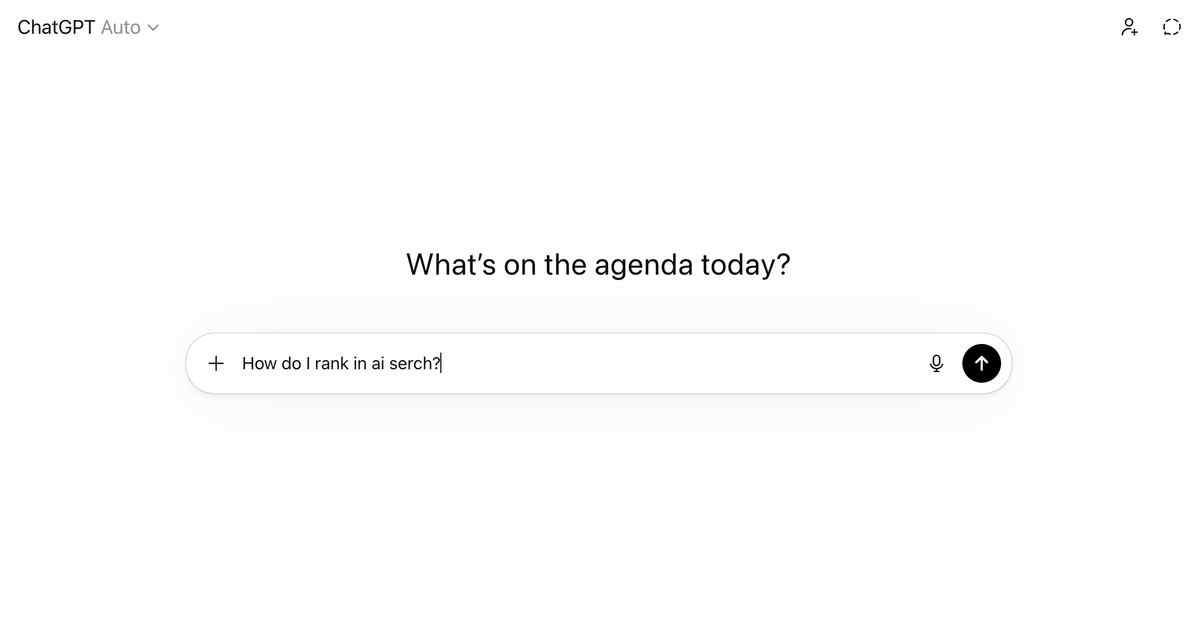
The paradigm of search has fundamentally shifted from traditional lexical retrieval (keyword matching) to semantic vector retrieval. As Large Language Models (LLMs) power modern search engines like Perplexity, ChatGPT Search, and Google's Generative AI experiences, the architectural requirements for ranking have evolved. It is no longer sufficient to optimize for BM25 algorithms; modern technical SEO requires structuring content specifically for Retrieval-Augmented Generation (RAG) pipelines.
This comprehensive guide explores the technical mechanics of LLM retrieval, the superiority of Static Site Generation (SSG) over traditional CMS architectures like WordPress, and the precise methodologies for structuring content to dominate LLM-driven search engines at an enterprise scale (5,000+ pages).
The Evolution of Retrieval: From Lexical to Dense Vectors
Historically, search engines relied on inverted indices and lexical scoring functions like TF-IDF and BM25. These algorithms look for exact or partial keyword matches within a document. If a user searched for "best enterprise headless CMS," the engine would retrieve documents containing those exact tokens.
LLM-driven search operates on Dense Vector Retrieval. Documents are converted into high-dimensional vectors (embeddings) representing their semantic meaning. When a user queries a system like Perplexity, the query is also vectorized. The system performs a Nearest Neighbor Search (usually Approximate Nearest Neighbor or ANN using algorithms like HNSW) to find document vectors that are mathematically closest to the query vector in the latent space.
Once retrieved, these document chunks are injected into the LLM's context window as a prompt, allowing the model to synthesize a coherent answer. To rank in this ecosystem, your content must not only be semantically relevant but also architecturally optimized for ingestion, vectorization, and contextual synthesis.
Anatomy of an LLM Crawler and RAG Pipeline
Understanding how an LLM crawler processes your site is critical. A typical RAG pipeline involves:
- Crawling: Fetching the HTML payload.
- Parsing & Cleaning: Stripping out boilerplate (navbars, footers, ads) to extract the core content.
- Chunking: Breaking the content into manageable semantic blocks (usually 256 to 1024 tokens) because LLMs have finite context windows.
- Embedding: Converting chunks into vector representations using models like
text-embedding-3-large. - Retrieval & Synthesis: Fetching relevant chunks and generating a response.
If your content is poorly structured, the chunking process will sever context. A fragmented chunk injected into an LLM will lack the necessary semantic weight to be cited as a source.
Why Static Site Generation (SSG) Crushes CSR and WordPress
LLM crawlers are computationally expensive. Unlike Googlebot, which has decades of infrastructure built to render JavaScript (albeit slowly), many emerging LLM bots (like OpenAI's OAI-SearchBot) prefer clean, immediately available HTML.
The Client-Side Rendering (CSR) Penalty
If your site relies on CSR (e.g., a standard React SPA), the crawler receives an empty <div> and a bundle of JavaScript. While some bots will execute the JS, it drastically increases the crawl budget overhead and introduces latency. LLM crawlers will often abandon JavaScript-heavy sites in favor of easily parseable static alternatives.
The WordPress DOM Bloat
WordPress, reliant on database queries and sprawling theme architectures, often generates deeply nested, non-semantic DOM trees. A typical WordPress page might have 15 levels of nested <div> elements before reaching the actual article text. This "DOM bloat" confuses LLM parsers, leading to inaccurate content extraction and poor vectorization.
The SSG Advantage
Static Site Generation (SSG) frameworks like Next.js or Astro, which AiPress utilizes, pre-render the HTML at build time. The resulting payload is raw, blazing-fast, and semantic HTML.
When an LLM bot hits an SSG site:
- The Time to First Byte (TTFB) is in milliseconds.
- The DOM is predictable and semantic.
- The crawler immediately accesses the core content without waiting for hydration or database queries.
This architectural superiority ensures your content is indexed rapidly and accurately vectorized.
Content Structuring: The "Chunkability" Metric
To optimize for RAG, your content must possess high "chunkability." This means the text is naturally divisible into coherent blocks that retain their meaning when isolated.
Rules for High Chunkability:
- Semantic HTML5: Use
<article>,<section>,<aside>, and<header>tags. LLM parsers use these landmarks to define chunk boundaries. - Strict Heading Hierarchy: Never skip heading levels (e.g., jumping from H2 to H4). Headings act as semantic anchors. An H3 should perfectly contextualize the paragraphs beneath it in relation to its parent H2.
- Information Density per Paragraph: Avoid long, rambling introductions. Lead with the entity and the core concept. Each paragraph should be a self-contained unit of meaning.
- Contextual Pronoun Resolution: Avoid starting sections with ambiguous pronouns ("This means that..."). If an LLM chunks the text at that sentence, "This" loses its reference. Explicitly state the subject ("This SSG architecture means that...").
Advanced Semantic HTML Implementation
Let's look at how to implement this in a Next.js App Router environment. Notice the strict adherence to semantic tags and schema injection.
import { Metadata } from 'next';
import { ArticleSchema } from '@/components/seo/ArticleSchema';

export async function generateMetadata({ params }): Promise<Metadata> {
  const post = await getPost(params.slug);
  return {
    title: post.title,
    description: post.excerpt,
    // Optimal OpenGraph and Twitter cards for initial discovery
  };
}

export default async function BlogPost({ params }) {
  const post = await getPost(params.slug);

  return (
    <main itemScope itemType="https://schema.org/TechArticle">
      <ArticleSchema post={post} />

      <article className="max-w-4xl mx-auto">
        <header>
          <h1 itemProp="headline">{post.title}</h1>
          <time itemProp="datePublished" dateTime={post.date}>
            {post.date}
          </time>
        </header>

        {/* The core payload for LLM extraction */}
        <section itemProp="articleBody" className="prose lg:prose-xl">
          <div dangerouslySetInnerHTML={{ __html: post.content }} />
        </section>

        <aside aria-label="Related Technical Concepts">
          {/* Internal linking utilizing entity-based anchor text */}
          <RelatedContent links={post.relatedContent} />
        </aside>
      </article>
    </main>
  );
}
JSON-LD as Context Injection
While LLMs are highly adept at Natural Language Processing, explicitly defining entities via JSON-LD acts as a direct context injection. When a crawler encounters well-structured JSON-LD, it can bypass the probabilistic guesswork of NLP and immediately map the entities within your content.
For LLM SEO, standard Article schema is insufficient. You must use About and Mentions properties to explicitly link your content to established Knowledge Graph entities (e.g., Wikipedia or Wikidata URLs).
{
  "@context": "https://schema.org",
  "@type": "TechArticle",
  "headline": "Structuring Content for LLM Retrieval",
  "about": [
    {
      "@type": "Thing",
      "name": "Retrieval-Augmented Generation",
      "sameAs": "https://en.wikipedia.org/wiki/Retrieval-augmented_generation"
    },
    {
      "@type": "Thing",
      "name": "Static Site Generation",
      "sameAs": "https://en.wikipedia.org/wiki/Static_site_generator"
    }
  ],
  "mentions": [
    {
      "@type": "SoftwareApplication",
      "name": "Next.js",
      "url": "https://nextjs.org/"
    }
  ]
}
By explicitly linking to Wikidata, you are feeding the LLM the exact vector coordinates of the concepts you are discussing, dramatically increasing your topical authority.
Simulating the Chunking Process
To truly understand how your content will be perceived by an LLM, you must build tools to simulate the ingestion process. At enterprise scale, running a similarity check before publishing is crucial.
Below is a Python snippet utilizing langchain and sentence-transformers to simulate how an article is chunked and vectorized.
from langchain.text_splitter import RecursiveCharacterTextSplitter
from sentence_transformers import SentenceTransformer
import numpy as np

def simulate_llm_ingestion(html_content):
    # 1. Clean HTML (Simulating the crawler's parser)
    clean_text = extract_text_from_html(html_content)

    # 2. Chunking (Simulating LLM context window limits)
    # Using RecursiveCharacterTextSplitter respects paragraph and sentence boundaries
    text_splitter = RecursiveCharacterTextSplitter(
        chunk_size=512,
        chunk_overlap=50,
        separators=["\n\n", "\n", ".", " "]
    )
    chunks = text_splitter.split_text(clean_text)

    # 3. Vectorization
    model = SentenceTransformer('all-MiniLM-L6-v2')
    embeddings = model.encode(chunks)

    return chunks, embeddings

def check_semantic_density(chunks, embeddings, target_query):
    query_vector = model.encode([target_query])

    # Calculate Cosine Similarity
    similarities = np.dot(embeddings, query_vector.T) / (
        np.linalg.norm(embeddings, axis=1)[:, None] * np.linalg.norm(query_vector)
    )

    # Identify low-density chunks that may confuse the LLM
    for i, sim in enumerate(similarities):
        if sim < 0.3:
            print(f"WARNING: Chunk {i} lacks semantic relevance to the query. Rewrite for better density.")
            print(f"Chunk text: {chunks[i][:100]}...")
This programmatic approach allows enterprise SEO teams to audit thousands of pages, ensuring every generated SSG page meets a minimum threshold of semantic density before deployment.
Handling Dynamic Content and Edge Cases
Paywalls and Gated Content
LLMs like Perplexity cannot bypass traditional paywalls. If your enterprise relies on gated content, you must implement isAccessibleForFree schema. However, to rank in LLMs, you must provide a substantial, un-gated executive summary that contains high-density vectors of your core thesis. Hiding the entire payload guarantees you will not be cited as a source.
Dynamic User Reviews
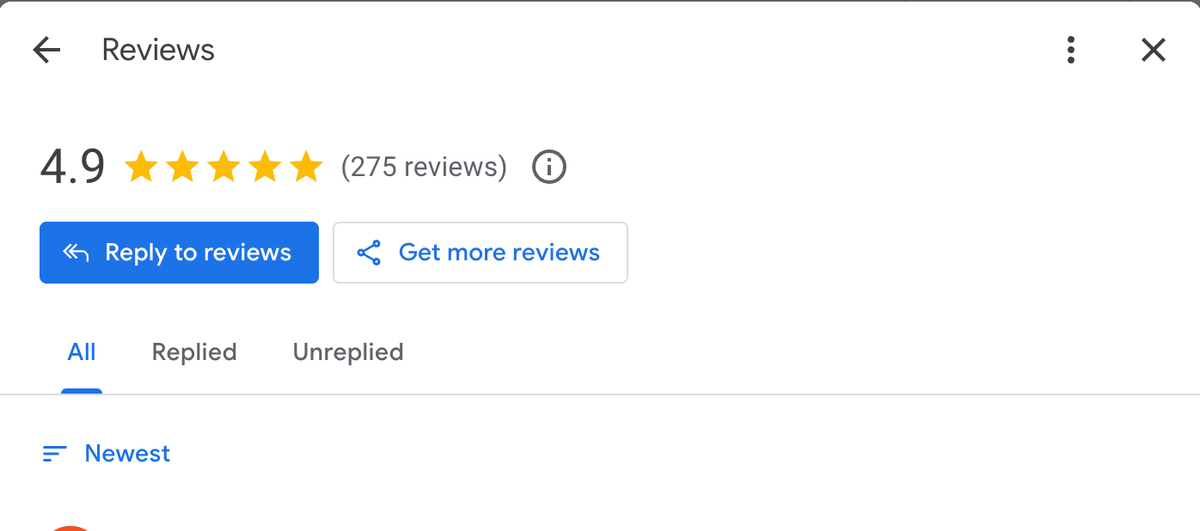
In local SEO or e-commerce, user reviews change constantly. In a CSR environment, these are fetched client-side. An LLM crawler will miss them. With an SSG architecture utilizing Incremental Static Regeneration (ISR) in Next.js, you can rebuild the static HTML page in the background whenever a new review is added. This ensures the LLM always receives the latest semantic payload in pure HTML.
Enterprise Scale Architecture (5000+ pages)
When scaling to thousands of pages, manual structuring is impossible. The architecture must enforce structural compliance automatically.
- Headless CMS Constraints: Configure your headless CMS (e.g., Sanity, Contentful) to reject content that skips heading levels.
- Automated Entity Extraction: Use NLP pipelines during the build step to automatically extract entities from the Markdown content and generate the
aboutandmentionsJSON-LD payload programmatically. - Vector Monitoring: Store your site's vectors in a database like Pinecone. Continuously monitor your vector clusters to identify content gaps and areas where your semantic density is weak compared to competitors.
Measuring LLM Retrieval Success
Traditional metrics like click-through rate (CTR) and keyword rankings are less relevant in the LLM era. Success is measured by Citation Frequency.
To track this:
- Monitor referral traffic from domains like
perplexity.aiandchatgpt.com. - Perform automated queries against LLM APIs using your target topics, parsing the output to see if your brand or specific URLs are cited in the generated response.
- Track brand mentions in conjunction with highly technical queries.
Conclusion
Ranking in Perplexity and ChatGPT is not an exercise in keyword stuffing; it is an exercise in data engineering. By abandoning legacy CSR and WordPress architectures in favor of highly structured, semantically dense Static Site Generation, you provide LLMs with the precise mathematical inputs they require.
Structure your content for maximum chunkability, inject context via advanced schema, and ensure your HTML payload is delivered instantly. This is the new technical SEO standard for the AI era.
Ready to transform your WordPress site?
Get a free preview of your site as a fast, modern site.
Free preview