
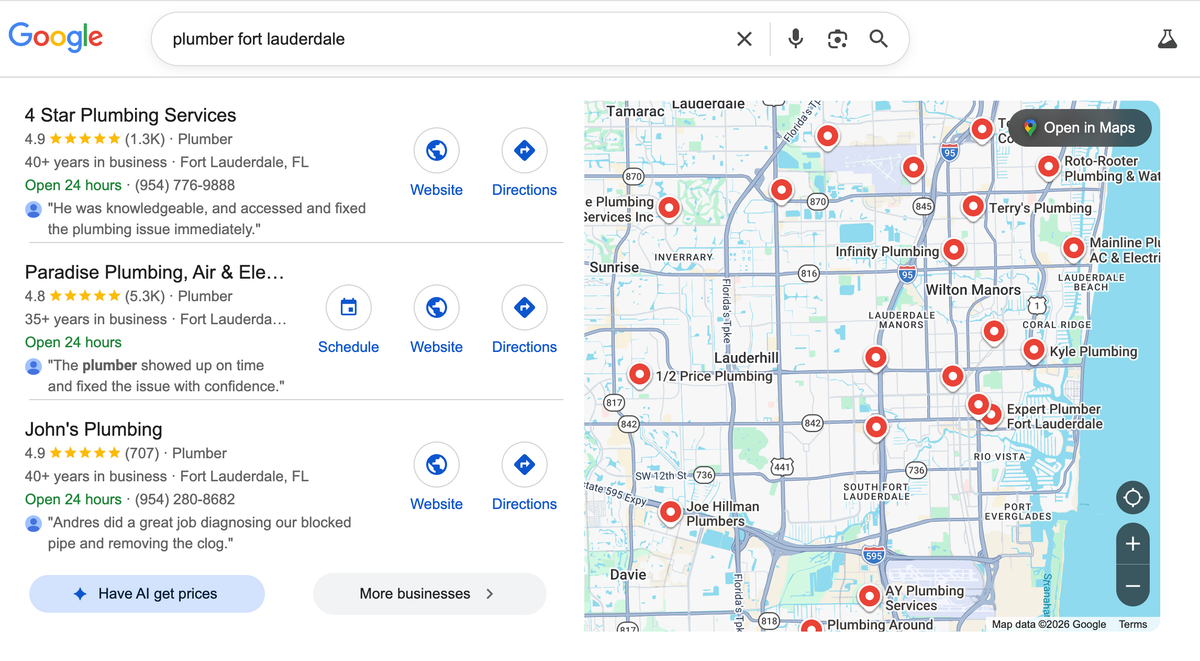
In the hyper-competitive landscape of Local SEO, the traditional strategy of spinning up hundreds of geo-targeted landing pages stuffed with "City + Keyword" variations is obsolete. Search engines, particularly Google and emerging AI-driven platforms, have transitioned from evaluating lexical strings to understanding spatial and conceptual entities.
To dominate local search at an enterprise scale—especially for multi-location brands and service-area businesses—you must architect your own custom Local Knowledge Graph. This technical deep dive explores the mechanics of entity resolution, the deployment of interconnected JSON-LD schema networks, and why Static Site Generation (SSG) is the only viable infrastructure for delivering these complex data structures without performance degradation.
Redefining Local SEO: From Strings to Things
Google's Local algorithm relies heavily on the Knowledge Graph to verify the legitimacy, prominence, and geographical relevance of a business. When a user searches for "enterprise HVAC installation near me," the engine does not merely look for those keywords. It queries its graph to find a LocalBusiness entity that is:
- Spatially proximate to the user's coordinates.
- Conceptually linked to the
Serviceentity "HVAC installation." - Verified through external citations (nodes) and authoritative backlinks (edges).
If your website architecture does not explicitly define these relationships in a machine-readable format, you force the search engine to guess. Guessing leads to lower confidence scores and, consequently, lower local pack rankings.
The Anatomy of a Local Knowledge Graph
A Knowledge Graph is a network of real-world entities and their interrelations, structured as "triples" (Subject -> Predicate -> Object). In Local SEO, you must construct a graph that unambiguously defines your business ecosystem.
Core Nodes:
- Organization: The parent corporate entity.
- LocalBusiness / Store: The specific physical location or service hub.
- Place / PostalAddress / GeoCoordinates: The spatial definition of the business.
- Service: The specific offerings (e.g., Commercial Plumbing, Residential Roofing).
- Person: Key practitioners (e.g., lead technicians, doctors, lawyers).
Predicates (Edges):
parentOrganization(links LocalBusiness to Organization)areaServed(links LocalBusiness to specific Place nodes/cities)makesOffer(links LocalBusiness to Service nodes)employee(links LocalBusiness to Person nodes)
Why WordPress Fails at Enterprise Schema (and why SSG Wins)
Generating a deeply interconnected schema network for a brand with 500+ locations using WordPress is a catastrophic architectural error. WordPress relies on dynamic PHP rendering and multiple database queries to assemble a page.
When you introduce complex schema generation plugins, you trigger exponential database load. Attempting to query the parent organization, pull in 50 service areas, cross-reference 20 services, and format it all into JSON-LD on every page load will destroy your Time to First Byte (TTFB). Since Core Web Vitals are a localized ranking factor, a slow TTFB will negate any schema benefits.
The SSG Advantage
Static Site Generation (SSG) frameworks like Next.js resolve this entirely. With AiPress's SSG architecture, the entire Knowledge Graph is compiled at build time. The complex logic of linking entities, querying geographical boundaries, and resolving relationships happens once on the server. The user (and Googlebot) receives a pre-computed, static HTML file containing a massive, instantly available JSON-LD payload. TTFB remains consistently under 50ms, regardless of schema complexity.
Implementing the Local Knowledge Graph: Nodes and Edges
To build a proprietary knowledge graph, you must output deeply nested, @id-referenced JSON-LD. This prevents data duplication and establishes a true graph structure.
Code Example: Defining the Organization and LocalBusiness Nodes
In a Next.js environment, we can dynamically generate this graph during the static build process. Notice how we use @id to link the nodes without duplicating the parent data.
export function generateLocalKnowledgeGraph(locationData) {
  const orgId = "https://www.aipress.io/#organization";

  const organizationNode = {
    "@type": "Organization",
    "@id": orgId,
    "name": "AiPress Enterprise Solutions",
    "url": "https://www.aipress.io",
    "logo": "https://aipress.io/images/aipresslogo.png",
    "sameAs": [
      "https://www.linkedin.com/company/aipress",
      "https://twitter.com/aipress"
    ]
  };

  const localBusinessNode = {
    "@type": "HVACBusiness",
    "@id": `${locationData.url}#localbusiness`,
    "name": `AiPress HVAC - ${locationData.cityName}`,
    "url": locationData.url,
    "telephone": locationData.phone,
    "parentOrganization": { "@id": orgId }, // The Edge linking to the parent node
    "address": {
      "@type": "PostalAddress",
      "streetAddress": locationData.street,
      "addressLocality": locationData.cityName,
      "addressRegion": locationData.state,
      "postalCode": locationData.zip,
      "addressCountry": "US"
    },
    "geo": {
      "@type": "GeoCoordinates",
      "latitude": locationData.lat,
      "longitude": locationData.lng
    },
    "areaServed": locationData.serviceAreas.map(area => ({
      "@type": "City",
      "name": area.name,
      "sameAs": area.wikipediaUrl // Crucial for spatial entity resolution
    })),
    "makesOffer": locationData.services.map(service => ({
      "@type": "Offer",
      "itemOffered": {
        "@type": "Service",
        "@id": `https://www.aipress.io/services/${service.slug}#service`,
        "name": service.name
      }
    }))
  };

  return {
    "@context": "https://schema.org",
    "@graph": [organizationNode, localBusinessNode]
  };
}
By passing this pre-computed object into a <script type="application/ld+json"> tag during the static build, you deliver a flawless graph to the crawler instantly.
Establishing SameAs and Entity Reconciliation
A standalone graph is useless if Google cannot reconcile it with its own massive Knowledge Graph. The sameAs property is the most powerful tool in Local SEO.
When defining an areaServed or a Service, you must link to established Wikidata or Wikipedia URLs. This is called Entity Reconciliation. Instead of telling Google "We serve Chicago" (a string), you say "We serve the spatial entity uniquely identified by https://www.wikidata.org/wiki/Q1297" (a node). This eliminates ambiguity and drastically boosts local relevance scores.
Leveraging the Google Knowledge Graph Search API
At an enterprise scale, manually finding Wikidata or Knowledge Graph Machine IDs (MIDs) is impossible. You must integrate the Google Knowledge Graph Search API into your build pipeline.
import requests
import json

def fetch_entity_mid(query, api_key):
    """
    Programmatically fetches the Google Knowledge Graph MID for a local entity.
    """
    url = f"https://kgsearch.googleapis.com/v1/entities:search?query={query}&key={api_key}&limit=1&indent=True"

    response = requests.get(url)
    data = response.json()

    if data.get('itemListElement') and len(data['itemListElement']) > 0:
        entity = data['itemListElement'][0]['result']
        mid = entity.get('@id') # Example: kg:/m/01_d4
        name = entity.get('name')
        return mid, name
    return None, None

# Example usage during a pre-build script
# This MID is then injected into the 'sameAs' property of the SSG schema payload.
mid, name = fetch_entity_mid("Commercial HVAC Systems", "YOUR_API_KEY")
print(f"Reconciled Entity: {name} -> {mid}")
Injecting these MIDs directly into your static JSON-LD payload forces Google's algorithms to recognize your exact conceptual relevance without requiring complex NLP processing on their end.
Edge Cases: Multi-Location Conflicts and Nested Entities
The Multi-Location Conflict
A common enterprise failure point is schema pollution. If a brand has 500 locations, outputting the Organization node with all 500 department or location edges on every single page dilutes the page's local relevance.
Solution: The local landing page must scope its graph tightly. The root node must be the specific LocalBusiness, referencing the parent Organization via @id. Do not inject the sibling locations into the local page's graph. Keep the spatial signal focused.
Nested Entities and Practitioners
For legal and medical fields, the relationship between the facility and the practitioner is critical. A hospital (MedicalOrganization) contains doctors (Physician).
You must utilize the employee or member predicates, and importantly, ensure the Physician node has its own distinct URL and reviews, linked back to the facility via parentOrganization.
Enterprise Scale: Managing 5000+ Local Nodes
When managing thousands of locations, data fragmentation is the enemy.
- Centralized Data Lake: All location data (hours, coordinates, services, staff) must live in a centralized headless CMS or database.
- Programmatic Build Triggers: When data changes (e.g., holiday hours for 50 stores), a webhook triggers an incremental static regeneration (ISR) for only those 50 pages.
- Graph Validation: Implement CI/CD pipeline checks that validate the generated JSON-LD against schema.org specifications and ensure no broken
@idreferences exist before deployment.
Conclusion
The era of manipulating local search through keyword density is over. Search engines are building massive spatial and conceptual graphs, and to rank, you must speak their native language.
By utilizing Static Site Generation to programmatically compile and deliver deeply interconnected, entity-reconciled JSON-LD networks, you establish unquestionable authority. You transition from being a collection of web pages to becoming a validated, authoritative node within Google's overarching Knowledge Graph. This is the foundation of enterprise local SEO dominance.
Knowledge Panel Triggers and Entity Confidence
When building an enterprise schema network, the ultimate goal is triggering a robust Google Knowledge Panel. Google relies on an internal metric known as the "Entity Confidence Score." If your confidence score crosses a certain algorithmic threshold, a Knowledge Panel is generated, dominating the right side of the desktop SERP.
To maximize this score, your SSG-generated schema must not only be syntactically correct but corroborated by authoritative third-party data.
Triangulating Data for Maximum Confidence
Google cross-references your JSON-LD payload with:
- Data Aggregators: (e.g., Foursquare, Data Axle, Localeze).
- Government Databases: Secretary of State filings and business licenses.
- Unstructured Web Mentions: NLP extraction of brand mentions on high-authority news sites.
If your SSG schema outputs a specific address, but the Data Axle API reports a slightly different suite number, your Entity Confidence Score plummets. Therefore, enterprise local SEO requires absolute data parity between the schema payload and the broader data ecosystem.
Validating Enterprise Schema Programmatically
At the scale of 5,000+ pages, manually checking the Rich Results Test tool is impossible. You must integrate schema validation directly into your CI/CD pipeline.
Using tools like Schema.org's validator API or custom Node.js scripts utilizing ajv (Another JSON Schema Validator), you can write automated tests that fail the deployment if the schema is malformed.
Code Example: Schema Validation in CI/CD
const Ajv = require("ajv");
const ajv = new Ajv();

const localBusinessSchemaDef = {
  // A strict JSON Schema definition of what your LocalBusiness payload MUST contain
  type: "object",
  required: ["@type", "@id", "name", "address", "geo"],
  properties: {
    "@type": { enum: ["LocalBusiness", "HVACBusiness", "Plumber"] },
    "address": { type: "object", required: ["streetAddress", "addressLocality"] }
  }
};

const validate = ajv.compile(localBusinessSchemaDef);

function testSchemaCompliance(generatedJsonLd) {
  const valid = validate(generatedJsonLd);
  if (!valid) {
    console.error("Schema Validation Failed:", validate.errors);
    process.exit(1); // Fail the build
  }
  console.log("Schema passes strict enterprise validation.");
}
By enforcing strict typing on your JSON-LD, you ensure that every single local page deployed to production contains a flawless, machine-readable Knowledge Graph node.
The Future of Spatial Entity Search
As LLMs become increasingly integrated into the local search experience (e.g., "Find a highly-rated commercial plumber near the financial district who specializes in boiler repair"), lexical matching will become entirely obsolete.
LLMs do not read words; they traverse graphs. By heavily investing in an SSG infrastructure that instantly delivers a mathematically precise, deeply interconnected Knowledge Graph, enterprise brands future-proof their local presence against the next decade of algorithmic shifts.
Ready to transform your WordPress site?
Get a free preview of your site as a fast, modern site.
Free preview