
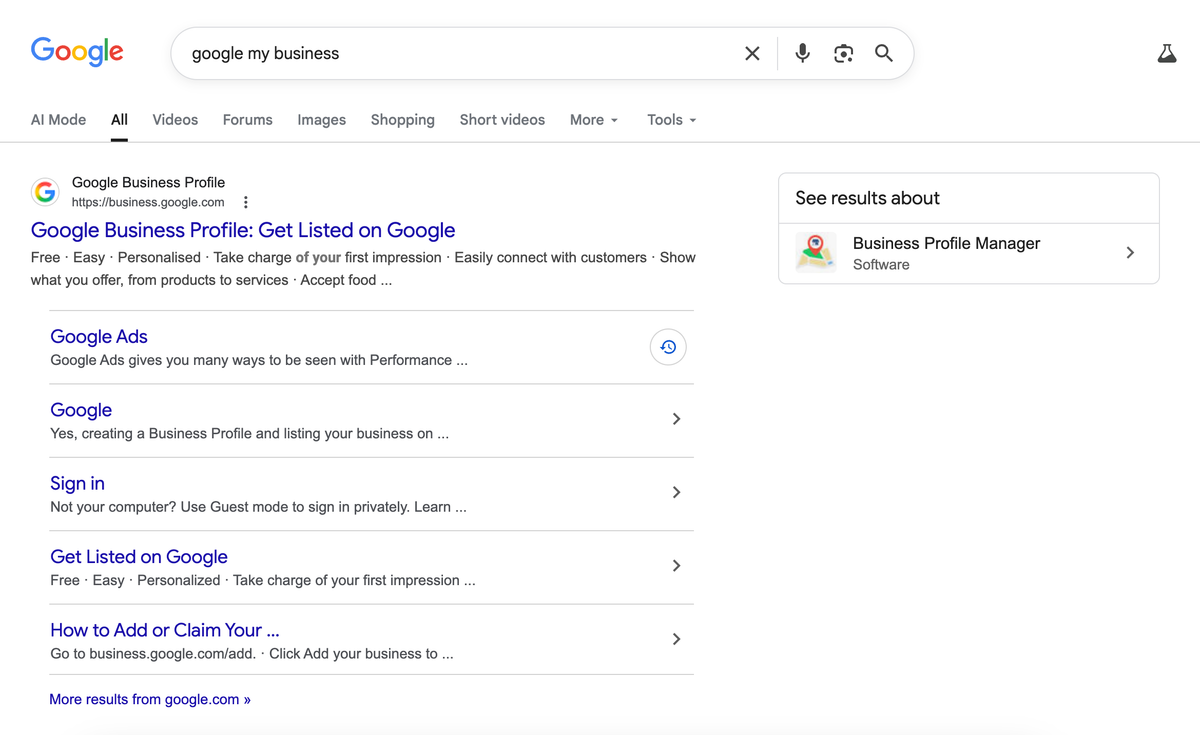
Managing a single Google Business Profile (GBP) is a marketing task; managing 5,000 Google Business Profiles is a massive data engineering challenge. For enterprise multi-location brands, franchises, and expansive service-area businesses, manual GBP optimization is impossible. Data fragmentation, rogue edits by local managers, and algorithmic suspensions can destroy millions of dollars in localized organic pipeline.
To dominate the Map Pack at scale, enterprises must architect a programmatic infrastructure that treats GBP as an API-first endpoint, heavily synchronized with a blazing-fast Static Site Generation (SSG) frontend. This deep dive explores the technical architecture required to automate, synchronize, and optimize thousands of local entities flawlessly.
The Enterprise Challenge: Data Fragmentation and the Local Algorithm
Google's Local algorithm relies heavily on NAP (Name, Address, Phone) consistency and data parity between the GBP entity and the linked landing page. If the GBP says "Open until 9 PM" but the linked website says "Open until 8 PM," Google's Knowledge Graph detects a conflict, lowers the confidence score of the entity, and suppresses the ranking.
When scaling to thousands of locations, maintaining parity manually is a failing battle. An API-driven architecture ensures a Single Source of Truth (SSOT).
Architectural Blueprint for Scalable GBP Syncing
The optimal architecture involves a centralized Headless CMS or Database (the SSOT) that pushes data bidirectionally:
- Upward to the Google Business Profile API.
- Downward to the SSG build pipeline (e.g., Next.js) to generate the location landing pages.
This guarantees absolute data parity. When a holiday hour is updated in the database, the GBP API is instantly patched, and an Incremental Static Regeneration (ISR) webhook triggers a rebuild of the specific location's static HTML page.
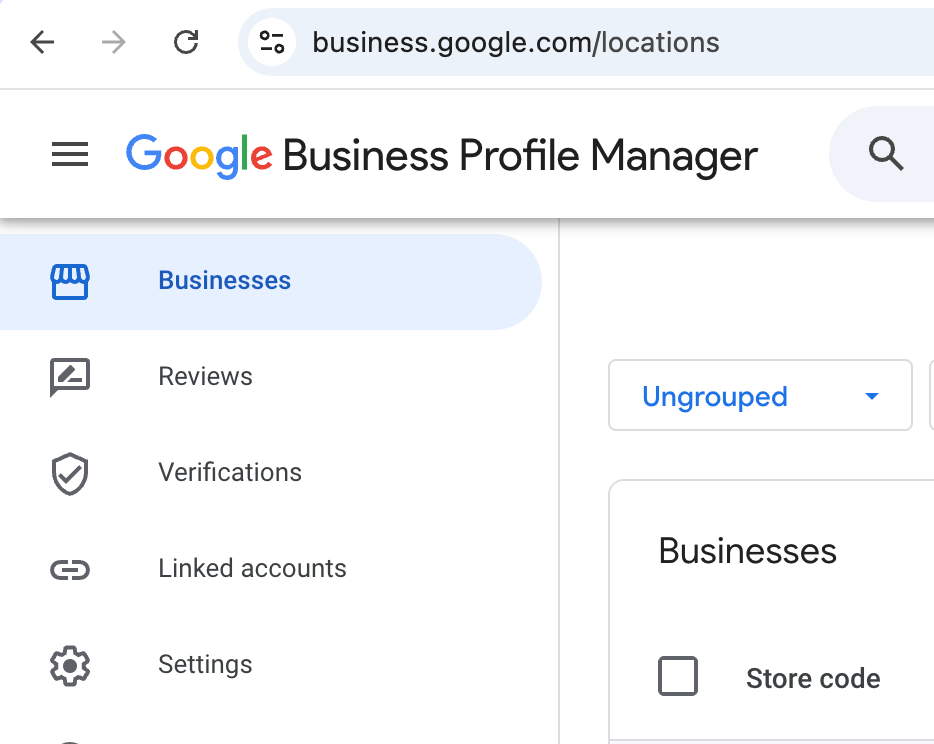
Deep Dive: The Google Business Profile API Integration
The GBP API is robust, allowing manipulation of nearly every facet of a profile: hours, attributes, posts, Q&A, and reviews.
Code Example: Node.js/TypeScript GBP API Client
To manage locations at scale, you must build microservices to handle OAuth 2.0 flows and batch updates to the locations endpoint.
import { google } from 'googleapis';

async function updateHolidayHours(accountId: string, locationId: string, holidayDate: string) {
  const auth = new google.auth.GoogleAuth({
    scopes: ['https://www.googleapis.com/auth/business.manage'],
  });

  const mybusinessbusinessinformation = google.mybusinessbusinessinformation({
    version: 'v1',
    auth: auth,
  });

  const name = `locations/${locationId}`;

  try {
    // Fetch current location data to preserve other fields
    const location = await mybusinessbusinessinformation.locations.get({ name });

    // Construct the SpecialHours payload
    const newSpecialHours = {
      specialHourPeriods: [
        ...(location.data.specialHours?.specialHourPeriods || []),
        {
          startDate: { year: 2026, month: 11, day: 26 },
          endDate: { year: 2026, month: 11, day: 26 },
          closed: true, // Closed for Thanksgiving
        }
      ]
    };

    // Patch the location
    const res = await mybusinessbusinessinformation.locations.patch({
      name,
      updateMask: 'specialHours',
      requestBody: { specialHours: newSpecialHours },
    });

    console.log(`Successfully updated holiday hours for ${locationId}`);

    // Trigger ISR webhook for the frontend to update the static page
    await triggerFrontendRebuild(locationId);

  } catch (error) {
    console.error(`Failed to update GBP API for ${locationId}:`, error);
  }
}
Why SSG is Mandatory for High-Velocity GBP Landing Pages
When a user clicks "Website" from a GBP listing on a mobile device, they expect instantaneous loading. The Core Web Vitals of the linked landing page directly influence the GBP's ranking potential.
If your GBP links to a slow WordPress template that requires 3 seconds of database queries to load local inventory, Google will penalize the listing due to poor user experience.
Using AiPress's SSG architecture, the location pages are pre-compiled. The TTFB is in the single-digit milliseconds. More importantly, the data fetched via getStaticProps during the build matches the GBP data exactly, ensuring 100% confidence from the crawling algorithm.
Code Example: Next.js SSG Generation for GBP Pages
import { getStoreDataFromSSOT } from '@/lib/database';
import { LocalBusinessSchema } from '@/components/schema';

// Generate static paths for all 5,000+ locations at build time
export async function generateStaticParams() {
  const stores = await getAllStores();
  return stores.map((store) => ({
    storeId: store.id,
  }));
}

export default async function LocationPage({ params }) {
  // Data fetched here perfectly mirrors what was sent to the GBP API
  const store = await getStoreDataFromSSOT(params.storeId);

  return (
    <main>
      <LocalBusinessSchema data={store} />
      <h1>{store.name}</h1>
      <address>
        {store.address.street}, {store.address.city}, {store.address.state}
      </address>
      <section aria-label="Store Hours">
        {/* Render hours dynamically from the SSOT */}
        <HoursTable hours={store.regularHours} special={store.specialHours} />
      </section>
    </main>
  );
}
Programmatic Review Management and Sentiment Analysis
At 5,000 locations, manually reading and replying to reviews is impossible. Yet, review response rate and sentiment are critical ranking factors.
Enterprise architectures utilize webhook subscriptions to the GBP API for new reviews. When a review drops, the payload is parsed and passed through an NLP sentiment analysis pipeline.
- Positive Reviews (4-5 stars): Programmatically auto-reply using a randomized, human-sounding response template that injects the relevant service keyword (e.g., "Thanks for the great feedback on our HVAC repair, [Name]!").
- Negative Reviews (1-3 stars): Automatically route to an internal ticketing system (e.g., Zendesk) for a human customer service representative to handle, temporarily pausing auto-replies for that specific thread.
Automating GBP Posts and Q&A
Frequency of updates signals active management to the local algorithm. Utilizing the mybusinessbusinessinformation API, enterprises can programmatically generate and schedule GBP Posts across thousands of locations.
Furthermore, the Q&A section of a GBP is a massively underutilized vector for long-tail keywords. You can programmatically inject Frequently Asked Questions directly into the GBP using the API, populating the local entity with high-density semantic keywords without waiting for actual users to ask them.
Handling Edge Cases: Suspensions, Duplicates, and Rate Limits
API Rate Limits
Google imposes strict quotas on the GBP API. When updating 5,000 profiles, you will hit rate limits. Your microservices must implement robust Exponential Backoff and Jitter algorithms. Queue updates in a system like RabbitMQ or AWS SQS, processing them at a controlled velocity.
Algorithmic Suspensions
Mass programmatic updates (especially to core fields like Name or Address) can trigger automated suspensions. Never batch-update core NAP data across all locations simultaneously. Stagger critical updates across a multi-day window to avoid tripping fraud detection algorithms.
Duplicate Listings
Franchisees often create rogue listings. Utilize the GBP API's locations.search functionality to programmatically scan coordinates and phone numbers to identify unauthorized duplicates, flagging them for merge or deletion to protect the canonical entity's ranking power.
Local Service Ads (LSA) Integration and Verification
A critical extension of GBP optimization is Local Service Ads (LSA). The Google Guarantee badge operates on a completely different trust paradigm. LSA requires extreme vetting: background checks, insurance verification, and business licenses.
For multi-location enterprises, the API architecture must seamlessly integrate the verification status of LSA campaigns into the Single Source of Truth. This prevents a location from advertising an invalid or expired license. When a license is renewed in the SSOT database, the API triggers a webhook to push the new documentation to the LSA dashboard programmatically, keeping the "Google Guaranteed" badge active without human intervention.
Monitoring Core Web Vitals on Local Pages
The speed of the local landing page directly impacts the GBP's organic visibility and the conversion rate of paid local campaigns. If you have 5,000 SSG pages, you cannot rely on manual Lighthouse tests.
You must build programmatic monitoring using the Chrome UX Report (CrUX) API.
const axios = require('axios');

async function getCruxData(url, apiKey) {
  const endpoint = `https://chromeuxreport.googleapis.com/v1/records:queryRecord?key=${apiKey}`;

  try {
    const response = await axios.post(endpoint, {
      url: url,
      formFactor: 'PHONE'
    });

    const metrics = response.data.record.metrics;

    const lcp = metrics.largest_contentful_paint.percentiles.p75;
    const cls = metrics.cumulative_layout_shift.percentiles.p75;
    const fid = metrics.first_input_delay.percentiles.p75;

    console.log(`LCP: ${lcp}ms, CLS: ${cls}, FID: ${fid}ms`);

    // Check against enterprise thresholds
    if (lcp > 2500) {
      console.warn(`CRITICAL WARNING: LCP exceeded 2.5s on ${url}`);
      // Trigger Slack notification to the engineering team
    }

  } catch (error) {
    console.error('Failed to fetch CrUX data:', error);
  }
}
By continuously polling the CrUX API for your 5,000 location pages, you ensure the technical foundation beneath your GBP listings remains blazing fast, cementing the SSG advantage.
Multi-Account Architecture for Franchises
When scaling past 1,000 locations, a single Google Account managing all GBPs becomes a massive single point of failure. If the account trips an automated suspension due to a batch update, the entire franchise network disappears from the map pack.
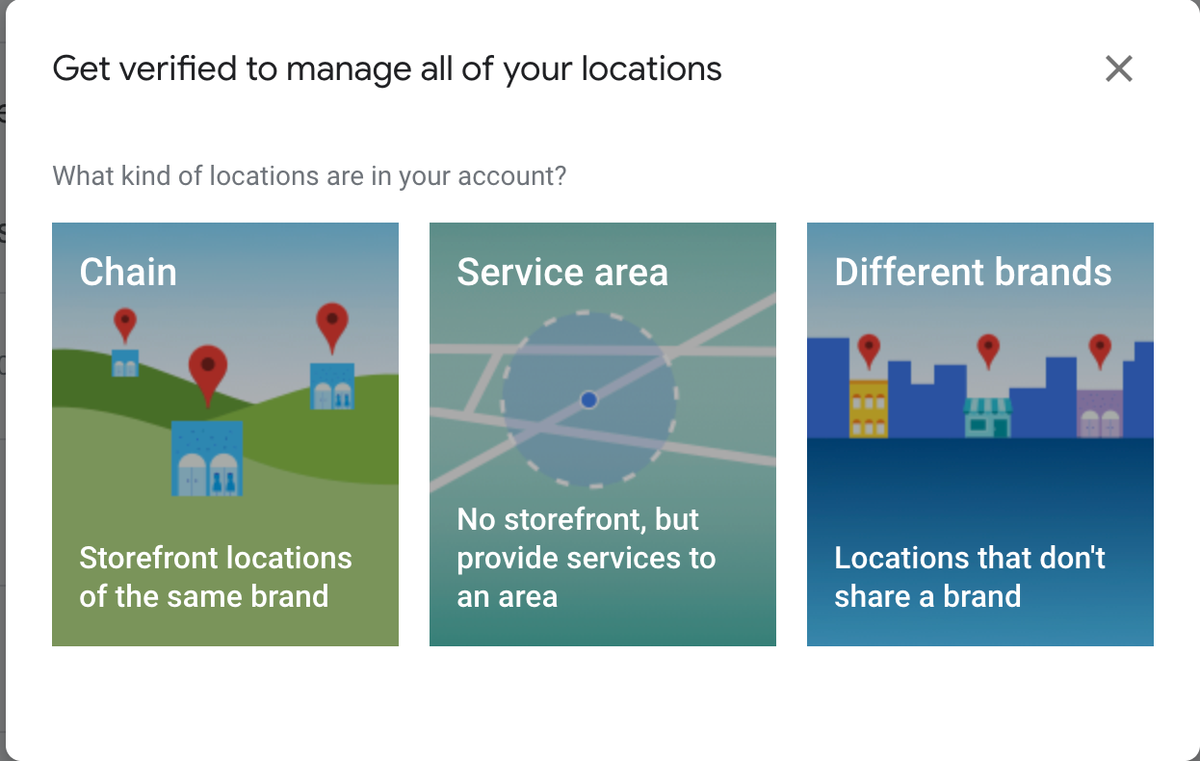
The Solution: Organization Accounts and Location Groups Enterprise architectures must utilize the GBP API to programmatically distribute locations across multiple "Location Groups" (formerly Business Accounts). Each region or large franchisee is assigned a specific Location Group under the master Organization Account.
If a rogue manager triggers a suspension by keyword stuffing the name of a specific location in the "Midwest Group," the suspension is isolated to that specific node. The API can detect the suspension status in real-time, automatically revoking access to the offending user, and alerting the enterprise SEO team to file an appeal immediately.
Webhooks for Real-Time State Parity
The state of a GBP is highly volatile. A user might "Suggest an Edit" that changes your business hours. If Google accepts this edit, your GBP and your SSOT database are now out of sync.
The GBP API provides a Pub/Sub webhook mechanism that fires an event when a location is modified. Your architecture must ingest these webhooks.
// Express route handler for GBP webhooks
app.post('/api/gbp-webhook', async (req, res) => {
  const notification = req.body;

  if (notification.updateMask.includes('regularHours')) {
    const locationName = notification.name;
    // Log the discrepancy
    console.log(`User-suggested edit accepted on ${locationName}`);

    // Auto-revert the malicious edit by pushing the correct data from the SSOT
    await revertHoursToCanonical(locationName);
  }

  res.status(200).send('OK');
});
This self-healing architecture is the hallmark of true enterprise Local SEO. By programmatically defending your entities against algorithmic changes and malicious user edits, you ensure absolute map pack stability.
Conclusion
Enterprise Local SEO is no longer about manual data entry; it is a discipline of data engineering and API orchestration. By centralizing data, utilizing the GBP API for programmatic management, and deploying blazing-fast SSG landing pages to ensure absolute parity and speed, multi-location brands can scale their local presence infinitely. Eliminate human error, synchronize your entities, and dominate the map pack programmatically.
Ready to transform your WordPress site?
Get a free preview of your site as a fast, modern site.
Free preview