
In technical SEO, the structure of your website is just as important as the content on it. A brilliant, 3,000-word guide on "Commercial HVAC Repair in Dallas" is entirely useless if search engines cannot find it, or if they determine it lacks authority because no other pages on your site link to it.
When executing large-scale SEO strategies—whether for an enterprise SaaS blog, an e-commerce catalog, or a massive programmatic local service hub—the most common point of failure is Orphan Pages.
An orphan page is a URL that exists on your server and perhaps in your XML sitemap, but has zero internal links pointing to it from within your website's architecture. Googlebot crawls your site by following links from one page to another. If a page is orphaned, it is invisible to the crawler’s natural discovery process, and it receives zero PageRank (link equity) from your homepage.
This comprehensive guide details how to engineer the perfect internal linking architecture for SEO hubs, ensuring that every page is crawlable, indexable, and positioned to rank.
1. The Dangers of Orphan Pages in Programmatic SEO
When you generate hundreds or thousands of pages programmatically, you must simultaneously generate a logical path for users and bots to reach them. A common mistake is simply uploading a massive list of URLs to an XML sitemap and expecting Google to figure it out.
The XML Sitemap Fallacy
An XML sitemap is a suggestion to Googlebot, not a command. While a sitemap helps Google discover URLs, it does not convey the hierarchy, context, or importance of those URLs.
If Googlebot finds a page in a sitemap but sees that you haven't bothered to link to it anywhere in your navigation, footer, or body content, the algorithm assumes the page is low-value. Why would you hide a supposedly valuable piece of content from your human visitors?
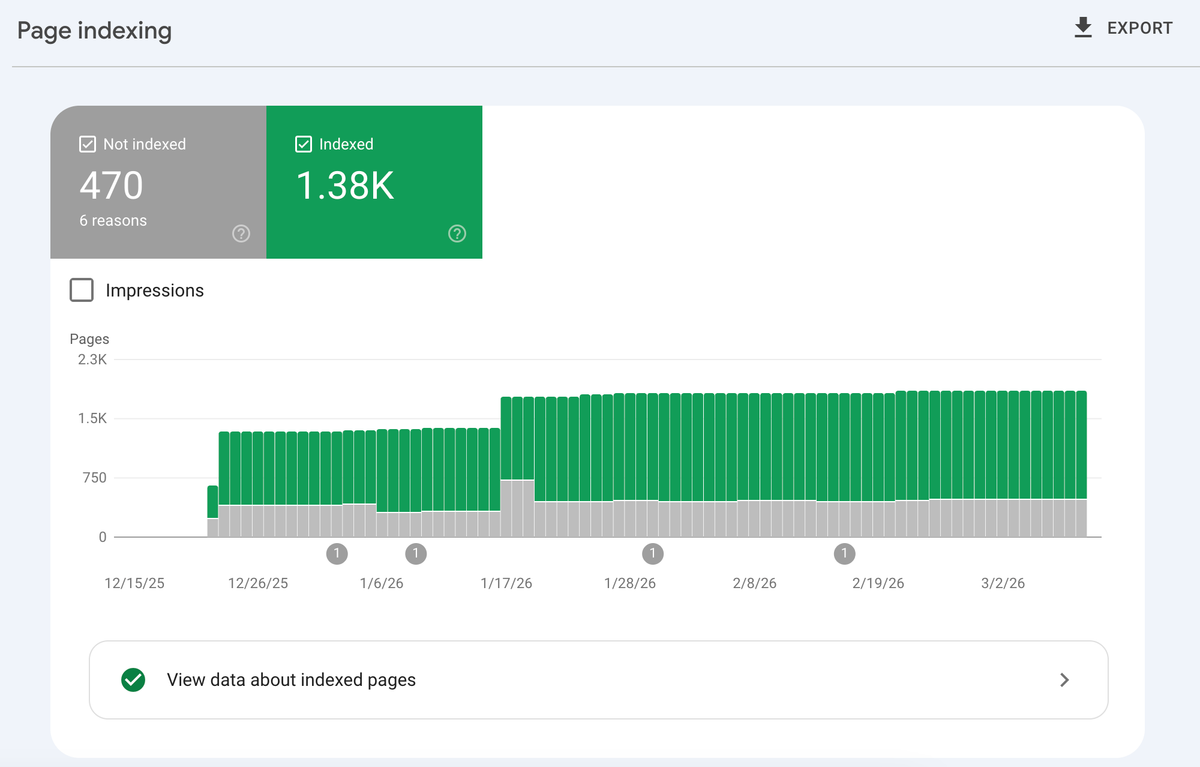
As a result, Google will likely place these orphaned programmatic pages in the "Discovered - currently not indexed" bucket. For a deeper understanding of how this impacts your overall server efficiency, read our guide on Crawl Budget Optimization.
The PageRank Desert
Internal links are the mechanism that distributes authority (PageRank) throughout your website. Your homepage usually has the most backlinks and the highest authority. By linking from the homepage to your core service pages, and from those service pages to specific location pages, you flow that authority downstream.
An orphan page sits in a PageRank desert. Without internal links, it has no authority, cannot compete for competitive keywords, and will struggle to rank even for long-tail, low-volume searches. Tools like SEMrush and Ahrefs are invaluable for visualizing this authority distribution and identifying which pages are suffering from low "Link Equity."
2. Architecting the Perfect SEO Hub (The Hub-and-Spoke Model)
To eliminate orphan pages and maximize topical authority, you must structure your content using the Hub-and-Spoke (or Topic Cluster) model. Tools like MarketMuse or SurferSEO can help you plan these clusters by identifying topical gaps and required entities.
The Hub Page
A Hub page is a broad, authoritative pillar page covering a core topic. For a plumbing company, the Hub might be /services/water-heater-repair/. This page should be linked directly from the main navigation menu or the homepage.
The Spoke Pages
Spoke pages are highly specific, long-tail articles or localized pages that dive deep into subtopics related to the Hub. For example:
/services/water-heater-repair/tankless-installation-guide//services/water-heater-repair/cost-to-replace-thermocouple//services/water-heater-repair/austin-tx/
The Linking Rules
- Hub to Spokes: The Hub page must contextually link to every single Spoke page. This acts as an index or a table of contents, immediately passing authority downstream to the granular content.
- Spoke to Hub: Every Spoke page must link back to the central Hub page using highly relevant anchor text (e.g., "Learn more about our comprehensive water heater repair services"). This signals to Google that the Hub is the most important page on this topic.
- Spoke to Spoke: Whenever relevant, Spoke pages should link sideways to other Spoke pages within the same cluster. If a user is reading about tankless installations, linking to the cost guide provides a better UX and reinforces the topical relationship.
When deploying localized programmatic SEO, structuring these Hubs properly prevents keyword cannibalization and ensures Google understands exactly which page should rank for a specific city. Learn more about Scaling Service Area Pages Safely.
3. Dynamic Internal Linking at Scale
When managing 5,000 pages, you cannot manually update internal links every time you publish a new piece of content. The linking architecture must be programmatic and dynamic.
Breadcrumbs: The Foundation of Hierarchy
Breadcrumbs (Home > Services > HVAC > AC Repair > Dallas) are mandatory for large sites. They provide a structural guarantee that no page is ever more than a few clicks away from the homepage.
Furthermore, you must implement BreadcrumbList JSON-LD schema so Google can display these breadcrumbs directly in the search results, increasing your click-through rate. Use the Rich Results Test to verify your implementation.
Dynamic "Related Areas" or "Nearby Cities" Modules
If you have a Hub page for "Texas Service Areas" that links to 500 individual city pages, that Hub page might look like a spammy link farm if not designed correctly.
Instead, use dynamic, localized linking modules on the Spoke pages. For instance, on the /plumber/dallas-tx/ page, programmatically inject a "Areas We Serve Near Dallas" section that links to 5-10 adjacent cities (e.g., Plano, Frisco, Garland).
This approach weaves a tight, localized web of internal links without dumping 500 links onto a single HTML document.
Contextual In-Body Linking Automation
Footer links and sidebar widgets are treated as "boilerplate" links by Google. They carry significantly less weight than contextual links placed directly within the body paragraphs of your content.
For enterprise platforms, engineer logic into your CMS or static site generator (SSG) that automatically scans body content for specific entities (like "tankless water heater" or "emergency AC repair") and converts the first instance into a hyperlinked anchor pointing to the relevant Spoke or Hub page.
4. Identifying and Fixing Existing Orphan Pages
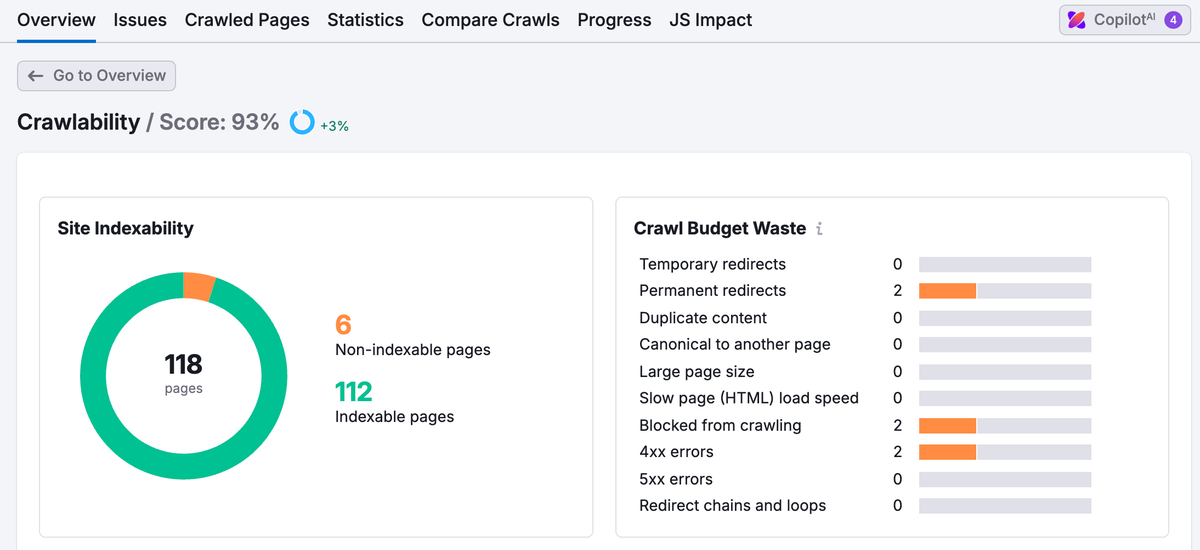
If you are auditing an existing large-scale site, finding orphan pages requires specialized tools.
- Crawl Your Site: Use a tool like Screaming Frog SEO Spider or Sitebulb to crawl your entire domain, following every internal link.
- Cross-Reference with Google Analytics / Search Console: Connect the crawler to your GA4 and Google Search Console APIs, and upload your XML sitemaps.
- The Orphan Report: The crawler will compare the list of URLs it found by crawling links against the list of URLs found in the sitemap or analytics data. Any URL that exists in the sitemap or analytics but was not discovered during the crawl is an Orphan Page.
4. Using Google Search Console for Link Audits
Google Search Console provides a dedicated Links report that is essential for reviewing how Google sees your internal architecture.
- Internal Links Report: This shows which pages have the most (and least) internal links. If your high-value programmatic pages are at the bottom of this list, they are likely underperforming due to a lack of authority.
- External Links Report: You can also monitor which third-party websites are linking to your content. A healthy internal architecture ensures that the "juice" from these external backlinks is distributed effectively across your spokes.
- Top Linking Text: Review the anchor text being used both internally and externally to ensure it aligns with your target keywords and topical entities.
The Triage Process
Once you have your list of orphan pages, you must categorize them:
- High-Value Orphans: Programmatic pages, service areas, or long-form guides that were forgotten. Action: Integrate them into a relevant Hub page immediately.
- Accidental Orphans: Old promotional landing pages or discontinued products. Action: Implement a 301 redirect to the most relevant parent category or Hub page.
- System Orphans: Autogenerated tag pages, author archives with no posts, or parameterized URLs. Action: Add a
noindextag, block them inrobots.txtif they cause crawl budget issues, or delete them. (For parameter handling, see our guide on SEO for Faceted Navigation).
5. The AiPress Advantage: Built-in Architecture
Managing internal linking at an enterprise scale is a massive engineering challenge when using legacy monolithic systems like WordPress. Links break when slugs change, Hub pages require manual updating, and massive query loops slow down the server.
By utilizing a modern, statically generated architecture (SSG) with a headless CMS, platforms like AiPress handle internal linking automatically during the build process. When a new programmatic service area is created, the system inherently knows which Hub it belongs to. It automatically generates the breadcrumbs, updates the "Nearby Areas" modules on sibling pages, and injects the Spoke link into the Hub index.
Because the site is pre-rendered into static HTML, Googlebot instantly receives a flawless, fully interconnected DOM. There are no rendering delays, no broken JavaScript routers, and absolutely zero orphan pages.
Conclusion
An orphan page is a wasted asset. It consumes server space, clutters your sitemaps, and provides zero ROI because search engines will never rank it.
To dominate local search and scale programmatic SEO to thousands of pages, you must engineer a flawless Hub-and-Spoke internal linking architecture. By utilizing dynamic breadcrumbs, contextual in-body linking, and localized "nearby" modules, you ensure that PageRank flows efficiently from your homepage down to the deepest, most granular long-tail service area page.
Stop relying on XML sitemaps to do the heavy lifting. Build a connected web of content, eliminate your orphan pages, and watch your crawl rate and rankings soar.