
In the enterprise SEO landscape, structured data is no longer merely a recommendation; it is the fundamental vocabulary used by Google's Knowledge Graph to resolve entities. When deploying programmatic SEO (pSEO) architectures scaling to thousands or tens of thousands of pages, manual implementation of Schema.org markup is functionally impossible. Furthermore, relying on generic CMS plugins (like Yoast or RankMath in WordPress) often results in static, unoptimized, and frequently broken schema that fails to capture the unique data points of localized or parameterized pages.
To achieve maximum organic visibility, engineering teams must build robust, dynamic JSON-LD generation pipelines. This guide details the technical implementation of automated structured data architectures using modern JavaScript frameworks, ensuring valid, entity-rich schema across infinite programmatic routes. By mastering these techniques, you can guarantee that every generated page explicitly communicates its purpose, geographical relevance, and hierarchical relationships directly to Google's semantic algorithms and the emerging wave of AI-driven search generative experiences (SGE).
The Flaws of Monolithic Schema Generation
Legacy systems typically rely on global settings to generate schema. A WordPress site might inject the same Organization and broad WebPage schema on all 5,000 local city pages. This is a massive missed opportunity and often leads to schema validation errors when Google attempts to parse local search intent or extract rich snippets.
The problems with plugin-based schema include:
- Lack of Specificity: Plugins cannot easily map dynamic relational database fields (e.g., mapping a specific city's population density to a local service threshold) into custom JSON-LD nodes. They rely entirely on basic post metadata, ignoring custom databases.
- DOM Bloat and Parsing Latency: Many legacy systems output messy microdata wrapped in HTML tags rather than clean, decoupled JSON-LD blocks in the
<head>. This increases DOM size, complexity, and parsing latency for crawlers. - Validation Fragility at Scale: Unescaped characters (like ampersands, quotation marks, or emojis in user-generated content) frequently break the JSON payload, rendering the entire schema block invalid. A single unescaped quote in a localized review can invalidate the entire
LocalBusinessobject for that specific programmatic route.
Architecting Dynamic JSON-LD in Next.js
Modern architectures leverage frameworks like Next.js, allowing developers to treat schema generation as a standard data transformation pipeline. Data fetched during the Static Site Generation (SSG) phase is directly mapped into typed TypeScript interfaces before being injected into the DOM. This ensures that schema is generated deterministically alongside the HTML payload, guaranteeing synchronous indexation.
Defining Strict TypeScript Interfaces for Schema.org
To prevent runtime errors and ensure schema validity, the first step is defining strict types for the Schema.org vocabulary you intend to use. Using TypeScript interfaces acts as a crucial guardrail, ensuring your programmatic loops do not output malformed JSON structures.
// types/schema.ts
export interface LocalBusinessSchema {
  "@context": "https://schema.org";
  "@type": string; // e.g., "HVACBusiness", "Plumber", "RoofingContractor"
  name: string;
  image: string[];
  "@id": string;
  url: string;
  telephone: string;
  priceRange: string;
  address: {
    "@type": "PostalAddress";
    streetAddress: string;
    addressLocality: string;
    addressRegion: string;
    postalCode: string;
    addressCountry: "US";
  };
  geo: {
    "@type": "GeoCoordinates";
    latitude: number;
    longitude: number;
  };
  aggregateRating?: {
    "@type": "AggregateRating";
    ratingValue: string;
    reviewCount: string;
  };
  areaServed?: {
    "@type": "GeoCircle";
    geoMidpoint: {
      "@type": "GeoCoordinates";
      latitude: number;
      longitude: number;
    };
    geoRadius: string;
  };
}
By enforcing strict typing, your CI/CD pipeline will fail the build if a programmatic data source is missing a critical requirement (like addressLocality), preventing invalid schema from ever reaching the production environment.
Building the Schema Generator Function
Once your types are established, construct a deterministic factory function that accepts your localized data model and returns the sanitized JSON-LD string. It is critical to use robust serialization to escape dangerous characters naturally occurring in database fields.
// lib/seo/generateLocalSchema.ts
import { LocalBusinessSchema } from '@/types/schema';

export function generateLocalSchema(locationData: LocationEntry): string {
  const schema: LocalBusinessSchema = {
    "@context": "https://schema.org",
    "@type": locationData.serviceType || "LocalBusiness",
    name: `${locationData.companyName} of ${locationData.city}`,
    "@id": `https://www.example.com/locations/${locationData.slug}/#business`,
    url: `https://www.example.com/locations/${locationData.slug}`,
    telephone: locationData.localPhone,
    priceRange: "$$",
    image: [locationData.heroImageUrl],
    address: {
      "@type": "PostalAddress",
      streetAddress: locationData.streetAddress,
      addressLocality: locationData.city,
      addressRegion: locationData.stateAbbreviation,
      postalCode: locationData.zipCode,
      addressCountry: "US",
    },
    geo: {
      "@type": "GeoCoordinates",
      latitude: locationData.coordinates.lat,
      longitude: locationData.coordinates.lng,
    },
    // Adding service area boundaries based on dynamic radius configurations
    areaServed: {
      "@type": "GeoCircle",
      geoMidpoint: {
        "@type": "GeoCoordinates",
        latitude: locationData.coordinates.lat,
        longitude: locationData.coordinates.lng,
      },
      geoRadius: locationData.serviceRadiusMiles.toString()
    }
  };

  // Conditionally inject reviews if they exist for this specific locale to trigger rich stars
  if (locationData.reviewMetrics && locationData.reviewMetrics.count > 0) {
    schema.aggregateRating = {
      "@type": "AggregateRating",
      ratingValue: locationData.reviewMetrics.average.toString(),
      reviewCount: locationData.reviewMetrics.count.toString(),
    };
  }

  // Use JSON.stringify safely to handle all character escaping automatically
  return JSON.stringify(schema);
}
Injecting JSON-LD into the React Server Component
With the App Router in Next.js, injecting this generated schema is highly efficient. Because React Server Components execute exclusively on the server (or at build time during SSG), the JSON-LD is delivered entirely within the initial HTML payload. Googlebot does not need to execute any heavy client-side JavaScript to parse the structured data. This guarantees 100% extraction efficiency during the rapid first-pass crawl phase.
// app/locations/[slug]/page.tsx
import { generateLocalSchema } from '@/lib/seo/generateLocalSchema';
import { getLocationData } from '@/lib/api';

export default async function LocationPage({ params }: { params: { slug: string } }) {
  const locationData = await getLocationData(params.slug);

  if (!locationData) return notFound();

  const jsonLd = generateLocalSchema(locationData);

  return (
    <>
      {/*
        Security Note: Using dangerouslySetInnerHTML is safe here provided
        that JSON.stringify() was used to serialize the object, neutralizing XSS vectors.
      */}
      <script
        type="application/ld+json"
        dangerouslySetInnerHTML={{ __html: jsonLd }}
      />
      <main>
        {/* Render the actual UI components */}
        <h1>Expert Service in {locationData.city}</h1>
        {/* ... */}
      </main>
    </>
  );
}
Advanced Multi-Entity Architectures
For complex programmatic directories, a single LocalBusiness tag is vastly insufficient. You must map multiple entities and define their relationships using the @id node to link them together in a unified semantic graph. Google relies heavily on interconnected schema to understand page context and hierarchical architecture.
Integrating FAQPage and BreadcrumbList
If your programmatic page dynamically generates FAQs based on database variables (e.g., "Do I need a permit for roofing in [City]?"), you must inject FAQPage schema to capture People Also Ask (PAA) real estate. Similarly, BreadcrumbList schema is essential for helping Google understand the Hub-and-Spoke architecture of an expansive programmatic site.
export function generateComplexSchema(data: ProgrammaticData): string {
  const breadcrumbSchema = {
    "@context": "https://schema.org",
    "@type": "BreadcrumbList",
    "itemListElement": [
      {
        "@type": "ListItem",
        "position": 1,
        "name": "Home",
        "item": "https://example.com"
      },
      {
        "@type": "ListItem",
        "position": 2,
        "name": data.state,
        "item": `https://example.com/locations/${data.stateSlug}`
      },
      {
        "@type": "ListItem",
        "position": 3,
        "name": data.city,
        "item": `https://example.com/locations/${data.stateSlug}/${data.citySlug}`
      }
    ]
  };

  const faqSchema = {
    "@context": "https://schema.org",
    "@type": "FAQPage",
    "mainEntity": data.faqs.map(faq => ({
      "@type": "Question",
      "name": faq.question,
      "acceptedAnswer": {
        "@type": "Answer",
        "text": faq.answer
      }
    }))
  };

  // Bundle multiple schemas into a unified Graph array for flawless parsing
  const graph = {
    "@context": "https://schema.org",
    "@graph": [
      generateLocalBusinessObject(data),
      breadcrumbSchema,
      faqSchema
    ]
  };

  return JSON.stringify(graph);
}
By nesting your objects within an @graph array, you deliver a clean, unified payload that Google's parsing engine digests flawlessly.
The Role of JSON-LD in Large Language Model (LLM) Retrieval
In 2026, structured data serves a dual purpose. It is no longer just for Google's traditional blue-link SERPs; it is critical for Retrieval-Augmented Generation (RAG) models, Google's Search Generative Experience (SGE), and AI agents like Perplexity. When an LLM crawls a page, well-structured JSON-LD acts as a machine-readable API response embedded directly in the HTML.
If an AI agent is queried with, "Find a plumber in Austin that services the 78701 zip code with 5-star reviews," it relies almost entirely on the addressLocality, postalCode, and aggregateRating JSON-LD nodes to synthesize an accurate answer instantly. An enterprise programmatic site missing dynamic JSON-LD is effectively invisible to the coming wave of AI-native search engines.
Validation at Enterprise Scale
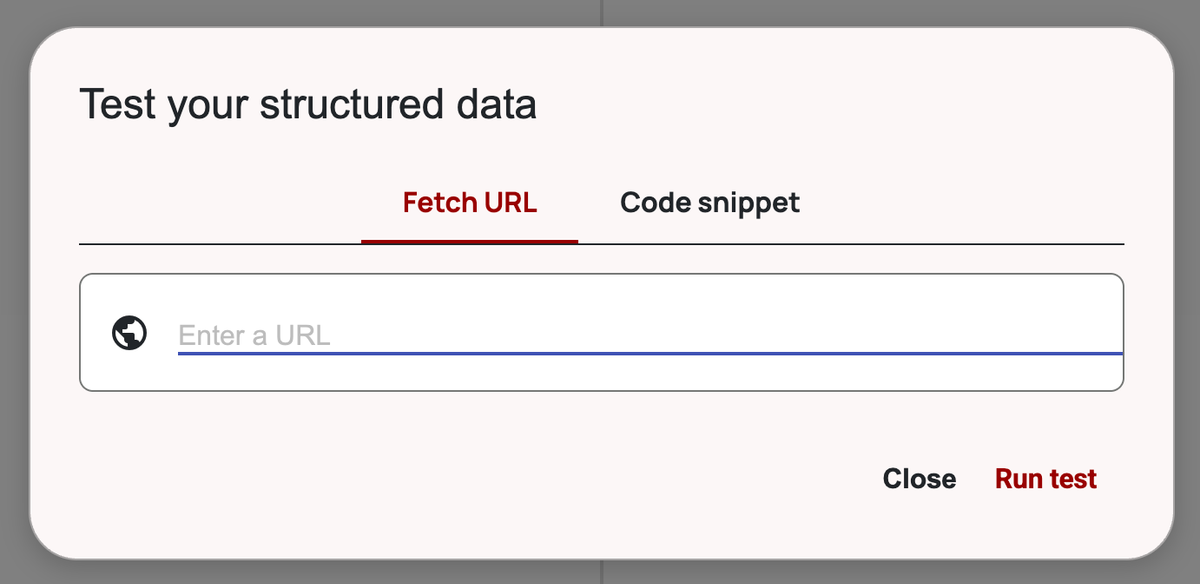
When deploying 10,000 pages, manually testing URLs in Google's Rich Results Test tool is impossible. You need automated testing methodologies integrated directly into your CI/CD pipeline to catch regressions.
Automated CI/CD Validation Framework:
Integrate schema validation directly into your build pipeline. Using tools like schema-dts or writing custom Jest tests to utilize the official Schema.org validation schemas ensures that no deployment goes out with malformed JSON.
- Static Analysis: Create a post-build script that picks a random sample of 50 generated static HTML files.
- Extraction: Extract the content of the
application/ld+jsonscript tag using a headless browser or simple DOM parser (like Cheerio). - Validation: Parse the JSON and validate it against your predefined interface constraints and required fields using a validation library (like Zod or Joi).
- Enforcement: Fail the build immediately if the parsed schema throws a validation error, preventing a catastrophic loss of rich snippets in production.
Using the Google Search Console API for Monitoring
For post-deployment validation, utilize the Google Search Console API to programmatically monitor Rich Results reports. If a specific programmatic template introduces a schema error (e.g., missing a required aggregate rating field due to a database glitch), you can trigger automated alerts in your engineering Slack channels before organic traffic drops.
Troubleshooting Common Edge Cases
When scaling dynamic schema, you will encounter edge cases. A frequent issue involves the aggregateRating schema. Google strictly penalizes self-serving reviews. If you are generating localized programmatic pages, the aggregateRating must represent genuine third-party reviews (like an aggregated score from Google Business Profiles or Trustpilot API data) specific to that exact locale, not a generic site-wide rating hardcoded into every template.
Another common error is failing to use absolute URLs. The @id and url fields within JSON-LD must be fully qualified absolute URLs (e.g., https://www.example.com/page), not relative paths (/page). Failing to use absolute URLs will frequently cause entity resolution failures in the Knowledge Graph.
Conclusion
Automating dynamic JSON-LD is a non-negotiable prerequisite for enterprise programmatic SEO. By moving away from monolithic plugins and treating schema as a core data engineering task, you ensure flawless entity resolution across thousands of pages. Utilizing strict typing, deterministic factory functions, React Server Components, and @graph entity bundling allows engineering teams to deploy massive, schema-rich web architectures. These modern architectures dominate the Knowledge Graph, secure rich snippets in highly competitive SERPs, and provide the exact machine-readable context required by the next generation of LLM-driven search experiences.
Ready to transform your WordPress site?
Get a free preview of your site as a fast, modern site.
Free preview