
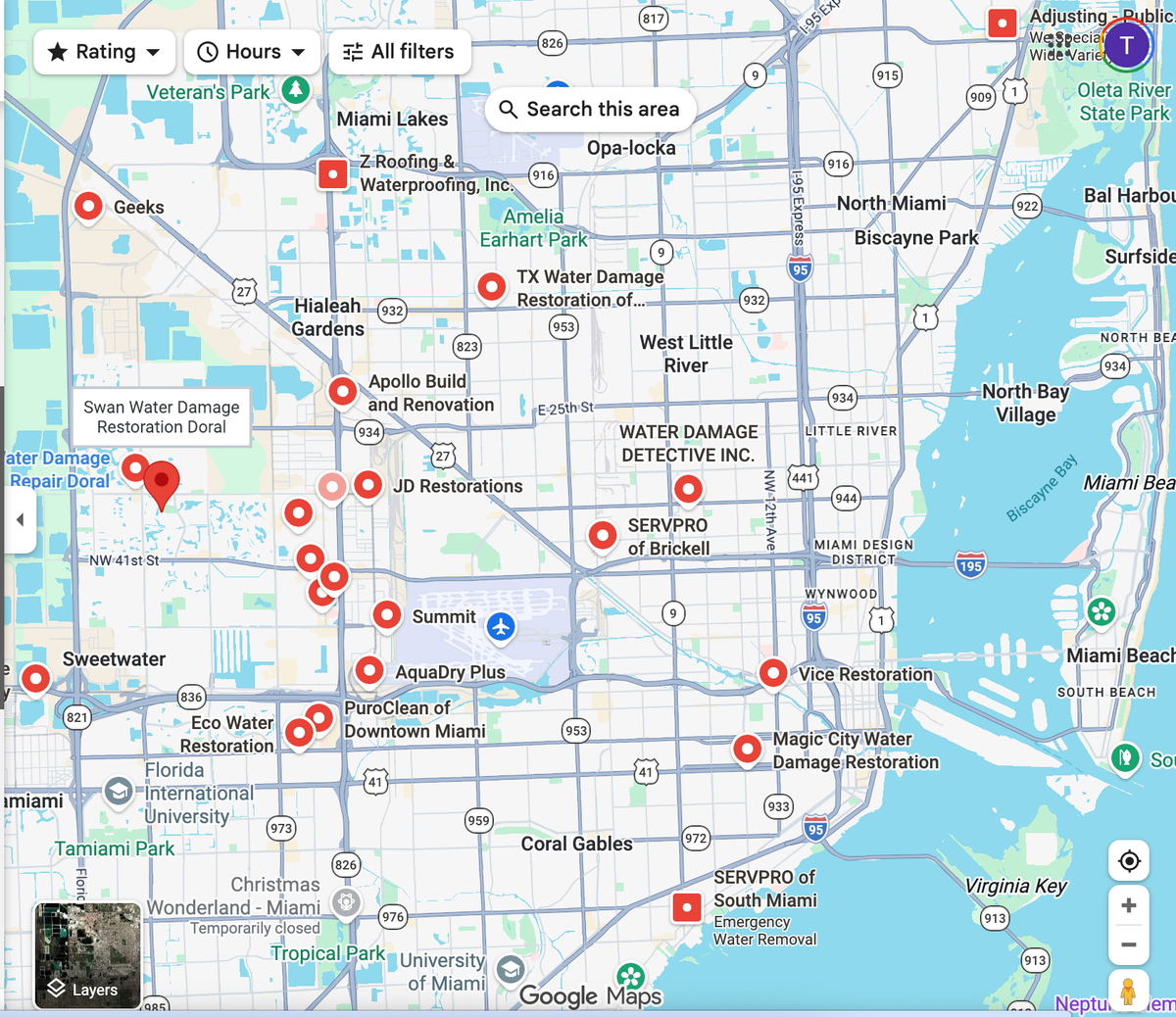
The era of the low-effort "Service Area Page" is dead. For years, local SEO was dominated by a programmatic approach that involved spinning up hundreds of thin, doorway-style pages targeting [Service] in [City]. Google's Helpful Content Update and subsequent core algorithm shifts have effectively deprecated this strategy, replacing it with a demand for genuine hyper-local topical authority.
To dominate local search at an enterprise scale (500 to 5,000+ locations), organizations must transition from keyword-stuffed landing pages to interconnected, entity-driven local silos. This requires a sophisticated architecture that leverages static site generation (SSG) to maintain sub-100ms load times while programmatically delivering deep, localized expertise.
In this guide, we dive deep into the technical mechanics of building hyper-local topical authority, exploring advanced URL architectures, programmatic content differentiation, graph-based internal linking, and enterprise-grade schema markup.
The Flaws of Traditional Service Area Pages
Historically, local SEO strategies relied on duplicating a core service page and swapping out the city name. This created a shallow architecture that search engines increasingly classify as doorway pages.
The primary issues with traditional service area pages include:
- Thin Content & Keyword Cannibalization: When 50 pages share 95% of the same boilerplate text, search engines struggle to index them efficiently, leading to crawl budget waste and cannibalization.
- Lack of Entity Relationships: Traditional pages fail to establish the relationship between the business, the specific geo-entity, the local infrastructure, and the specific service constraints of that area.
- Poor User Intent Satisfaction: A user searching for "commercial HVAC repair in Chicago" has different intent and constraints (e.g., specific building codes, weather conditions) than a user in Miami. Generic pages fail to address these hyper-local realities.
Architecting a Local Topical Silo
To build hyper-local topical authority, you must structure your site to map directly to Google's Knowledge Graph. This means treating every location as a distinct entity with its own ecosystem of supporting content.
The Hub-and-Spoke Local Architecture
A scalable local silo architecture should follow a strict hierarchical structure, routing from the state level down to the hyper-local neighborhood or service level.
/locations/
├── /texas/ (State Hub)
│   ├── /dallas/ (City Hub)
│   │   ├── /commercial-hvac/ (Service Node)
│   │   │   ├── /downtown-dallas-high-rise-cooling/ (Hyper-Local Spoke)
│   │   │   └── /case-studies/tech-data-center/ (Proof Node)
│   │   └── /residential-hvac/ (Service Node)
This structure achieves three critical SEO objectives:
- It creates a clear, logical URL path that search engine crawlers can easily parse.
- It allows for the concentration of PageRank at the City Hub, which then flows down to specific Service Nodes.
- It naturally prevents keyword cannibalization by strictly compartmentalizing services by geo-location.
Implementing Dynamic Routing at Scale
When dealing with 5,000+ pages, traditional Content Management Systems like WordPress fail completely, bogged down by heavy database queries on every page load. The modern solution is to use a Static Site Generator (SSG) like Next.js, Astro, or Nuxt to pre-render these local silos at build time.
Here is an advanced Next.js dynamic routing implementation using getStaticPaths to pre-build a massive local SEO architecture:
// pages/locations/[state]/[city]/[service].tsx
import { GetStaticPaths, GetStaticProps } from 'next';
import { fetchLocalSiloData, fetchAllLocationsAndServices } from '@/lib/api';
import ServicePageLayout from '@/components/ServicePageLayout';

export const getStaticPaths: GetStaticPaths = async () => {
  // Fetch all valid combinations of state, city, and service
  // e.g., [{ state: 'tx', city: 'dallas', service: 'hvac-repair' }, ...]
  const routes = await fetchAllLocationsAndServices();

  const paths = routes.map((route) => ({
    params: {
      state: route.stateSlug,
      city: route.citySlug,
      service: route.serviceSlug,
    },
  }));

  return {
    paths,
    // Use 'blocking' for enterprise scale to avoid infinite build times.
    // Pages are generated on the first request and cached at the CDN edge.
    fallback: 'blocking',
  };
};

export const getStaticProps: GetStaticProps = async ({ params }) => {
  const { state, city, service } = params as { state: string; city: string; service: string };

  // Fetch specific localized content, ensuring uniqueness
  const pageData = await fetchLocalSiloData(state, city, service);

  if (!pageData) {
    return { notFound: true };
  }

  return {
    props: {
      data: pageData,
    },
    // Revalidate every 24 hours to keep dynamic content (like recent reviews) fresh
    revalidate: 86400,
  };
};

export default function LocalServicePage({ data }) {
  return <ServicePageLayout data={data} />;
}
This architecture allows you to maintain static performance (TTFB < 50ms) while serving highly localized, dynamic content.
Programmatic Content Differentiation
If you are generating 5,000 service area pages, how do you prevent them from being flagged as duplicate content? The answer is programmatic content differentiation tied to local datasets.
Instead of just replacing the city name, your Headless CMS should inject highly specific, localized data blocks into the SSG build process.
Leveraging Local Datasets
- Local Case Studies & Proof of Work: Pull in geocoded data from your CRM. Show the exact number of jobs completed in that specific zip code, along with embedded maps showing general service radiuses.
- Hyper-Local Reviews: Filter your review API (e.g., Google Business Profile, Trustpilot) to only show reviews from customers in that specific city on that specific city's service page.
- Geo-Specific Content Blocks: For an HVAC company, inject real-time or historical climate data. "Dallas experiences an average of 18 days over 100°F in August—here is how we configure AC units for extreme Texas heat."
- Local Ordinances and Codes: Reference specific local building codes or municipal requirements that demonstrate genuine local expertise.
By integrating these disparate data sources via an API layer during the SSG build step, you create pages that are mathematically impossible to classify as duplicate content.
Graph-Theory Internal Linking for Local SEO
Internal linking is the circulatory system of your local topical authority. Traditional localized sites rely heavily on massive footer links containing hundreds of cities. Search engines actively devalue these boilerplate footer links.
Instead, employ a graph-based internal linking strategy that connects nodes logically based on geographic and topical proximity.
The Proximity Linking Model
A Service Node in Dallas (/locations/texas/dallas/hvac/) should NOT link to a Service Node in Miami. It should link to:
- Upward: The Dallas City Hub (
/locations/texas/dallas/). - Lateral (Topical): Other services within Dallas (
/locations/texas/dallas/plumbing/). - Lateral (Geographic): Adjacent suburbs within the same metropolitan area (e.g.,
/locations/texas/plano/hvac/).
This can be achieved programmatically by calculating geospatial distances between service areas in your database and automatically generating a "Nearby Service Areas" component.
// Algorithm conceptualization for generating proximity links
function getNearbyServiceAreas(currentLat: number, currentLon: number, allLocations: Location[], maxDistanceMiles: number = 25) {
  return allLocations.filter(loc => {
    const distance = calculateHaversineDistance(currentLat, currentLon, loc.lat, loc.lon);
    return distance <= maxDistanceMiles && distance > 0;
  }).slice(0, 5); // Return top 5 closest areas
}
This creates a tightly woven web of relevance that search engines can crawl, understanding the exact boundaries and depth of your service area footprint.
Advanced Structured Data: Mapping the Enterprise
To solidify your hyper-local authority, you must feed search engines explicit entity relationships using JSON-LD schema markup. For enterprise local SEO, a simple LocalBusiness schema is vastly insufficient. You must nest Service, AreaServed, and Review schemas into a comprehensive graph.
The Entity-Relationship Schema Model
For each localized service page, the schema should explicitly state:
- Who is providing the service (
LocalBusiness). - What the specific service is (
Service). - Exactly where the service is provided, using explicit geographic shapes or postal codes (
AreaServed). - Proof of authority (
AggregateRating).
Here is a highly advanced schema structure for a hyper-local service page:
{
  "@context": "https://schema.org",
  "@type": "Service",
  "name": "Commercial HVAC Repair in Downtown Dallas",
  "provider": {
    "@type": "HVACBusiness",
    "@id": "https://www.example.com/#organization",
    "name": "Acme Climate Control",
    "image": "https://www.example.com/images/logo.png",
    "address": {
      "@type": "PostalAddress",
      "streetAddress": "123 Commerce St",
      "addressLocality": "Dallas",
      "addressRegion": "TX",
      "postalCode": "75201",
      "addressCountry": "US"
    },
    "telephone": "+1-555-0100"
  },
  "areaServed": {
    "@type": "City",
    "name": "Dallas",
    "sameAs": "https://en.wikipedia.org/wiki/Dallas"
  },
  "serviceType": "Commercial HVAC Maintenance and Repair",
  "hasOfferCatalog": {
    "@type": "OfferCatalog",
    "name": "Dallas Commercial HVAC Services",
    "itemListElement": [
      {
        "@type": "Offer",
        "itemOffered": {
          "@type": "Service",
          "name": "High-Rise Chiller Repair"
        }
      },
      {
        "@type": "Offer",
        "itemOffered": {
          "@type": "Service",
          "name": "Rooftop Unit (RTU) Installation"
        }
      }
    ]
  },
  "aggregateRating": {
    "@type": "AggregateRating",
    "ratingValue": "4.9",
    "reviewCount": "142"
  }
}
Notice the use of the sameAs attribute pointing to the Wikipedia entry for Dallas. This explicitly ties your page to Google's recognized Knowledge Graph entity for the city, disambiguating your content from similarly named locations.
Handling Edge Cases: Multi-State and Overlapping Areas
At enterprise scale, edge cases become the norm. Two of the most complex challenges are overlapping service areas and multi-state operations.
Overlapping Service Areas
If a franchise operates two physical locations whose service radii overlap in a specific suburb, you risk severe keyword cannibalization.
The Solution: Implement a programmatic routing layer that assigns a specific zip code or suburb exclusively to one canonical location based on primary business logic (e.g., proximity to the dispatch center). The routing table must ensure that /locations/texas/plano/ only exists under the most appropriate franchise hub, and any alternative URLs implement a 301 redirect or rel="canonical" tag.
Multi-State Operations
When operating across state lines, the structural hierarchy must remain consistent, but local variations in terminology must be respected. For example, what is called a "heat pump" in one region might be searched as a "split system" in another.
Your Headless CMS should include a synonym or localized-terminology dictionary. During the SSG build process, the content parser swaps out broad terms for hyper-local search variations based on the state or city parameter, ensuring the page perfectly aligns with regional search intent without requiring manual rewrites.
The Advantage of SSG over WordPress for Local SEO
Finally, the technology stack is the unsung hero of hyper-local topical authority. A massive local footprint on a traditional monolithic CMS like WordPress is an SEO liability.
WordPress dynamically generates pages via PHP and MySQL database calls on every request. A site with 5,000 service pages will suffer from bloated DOMs, slow TTFB (Time to First Byte), and frequent database timeouts under heavy crawl pressure. Googlebot operates on a crawl budget; if your server is slow to respond, Google simply crawls fewer pages, leaving your local silos unindexed.
By utilizing an SSG (Static Site Generation) architecture with Next.js or Astro, those 5,000 pages are pre-compiled into static HTML and JSON files. They are distributed across a global Edge CDN.
The Results:
- TTFB: Drops from 600ms to < 50ms.
- Core Web Vitals: Guaranteed passes on LCP, FID, and CLS.
- Crawl Efficiency: Googlebot can crawl your entire 5,000-page local footprint in a fraction of the time, resulting in faster indexation and higher aggregate rankings.
Conclusion
Building hyper-local topical authority is no longer about spinning up superficial service area pages. It requires a sophisticated, programmatic approach that intertwines deep technical SEO, entity-based architecture, graph-theory linking, and modern static site generation.
By treating every location as a unique entity and supporting it with highly specific, data-driven content, enterprise organizations can dominate local search results across thousands of geographies simultaneously. The investment in a headless, static architecture pays compounding dividends as you scale, transforming your local SEO footprint into an impenetrable moat.
Ready to transform your WordPress site?
Get a free preview of your site as a fast, modern site.
Free preview