
HVAC SEO: The Ultimate 2026 Guide to Dominating Local Search
In the HVAC industry, visibility isn't just a marketing goal—it's the difference between a fully booked schedule and a fleet of idle service vans. When a furnace fails during a record-breaking blizzard or an AC unit dies in the middle of a July heatwave, customers don't spend hours researching. They grab their phones and call the first reputable company they find in the search results.
This is the reality of HVAC search intent. It is urgent, high-stakes, and overwhelmingly local.
As we move into 2026, the traditional "set it and forget it" SEO strategies of the past are no longer enough. Google’s algorithms have become more sophisticated, AI-driven search (SGE) is changing how results are displayed, and users' expectations for website speed and mobile experience are at an all-time high.
This guide provides a comprehensive, 1,500+ word blueprint for HVAC business owners and marketers who want to dominate their local markets, outrank entrenched competitors, and generate a consistent flow of high-quality leads.
Why HVAC SEO is Unique
Before diving into the tactics, it’s important to understand what makes SEO for heating, ventilation, and air conditioning companies different from other industries.
1. The Seasonality Factor
HVAC demand is dictated by the weather. Your SEO strategy must account for these shifts. You don't want to start ranking for "AC repair" in August; you need to be at the top of the results in May. A successful HVAC SEO strategy is always three months ahead of the current season.
2. Emergency vs. High-Ticket Intent
HVAC companies deal with two distinct types of customers:
- Emergency Searchers: Their system is broken. They need help NOW. They prioritize proximity and speed.
- Project Searchers: They are looking for a new furnace or heat pump installation. They are doing research, comparing brands, and looking for financing options.
Your website must satisfy both types of intent simultaneously.
3. Intense Local Competition
In any given metro area, there are dozens—if not hundreds—of HVAC companies. Most are competing for the same "near me" keywords. To win, you can't just be "good"; you have to be technically superior and more authoritative than the competition.
Part 1: Mastering the Google Map Pack (Local SEO)
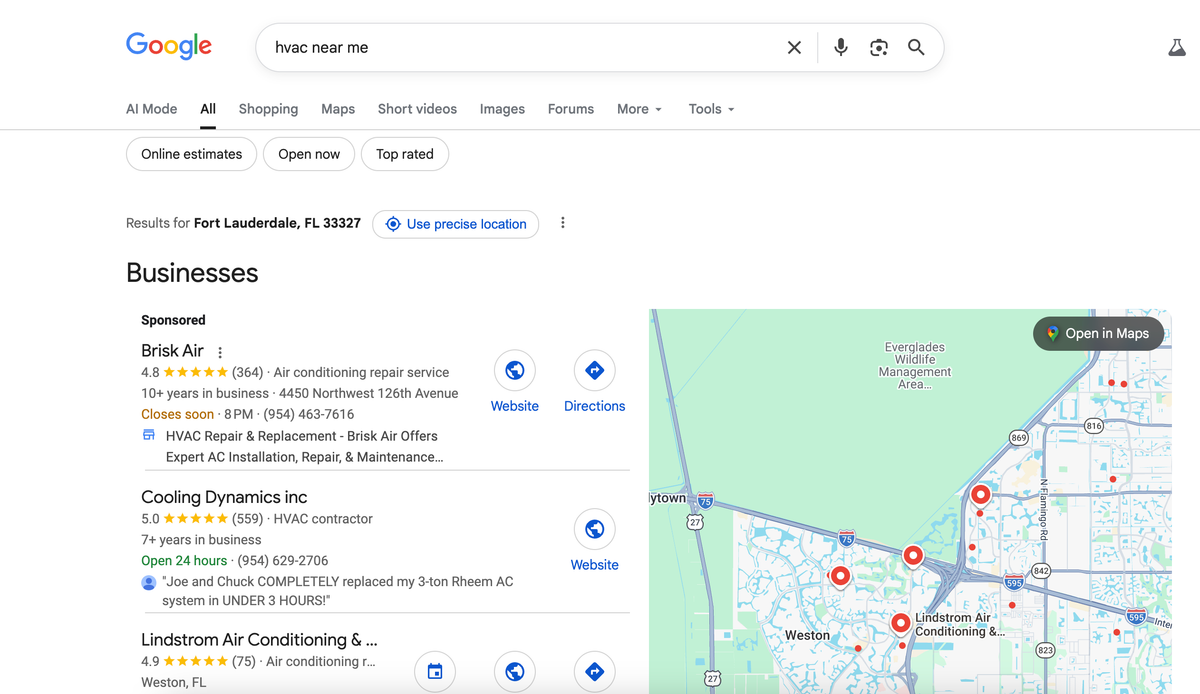
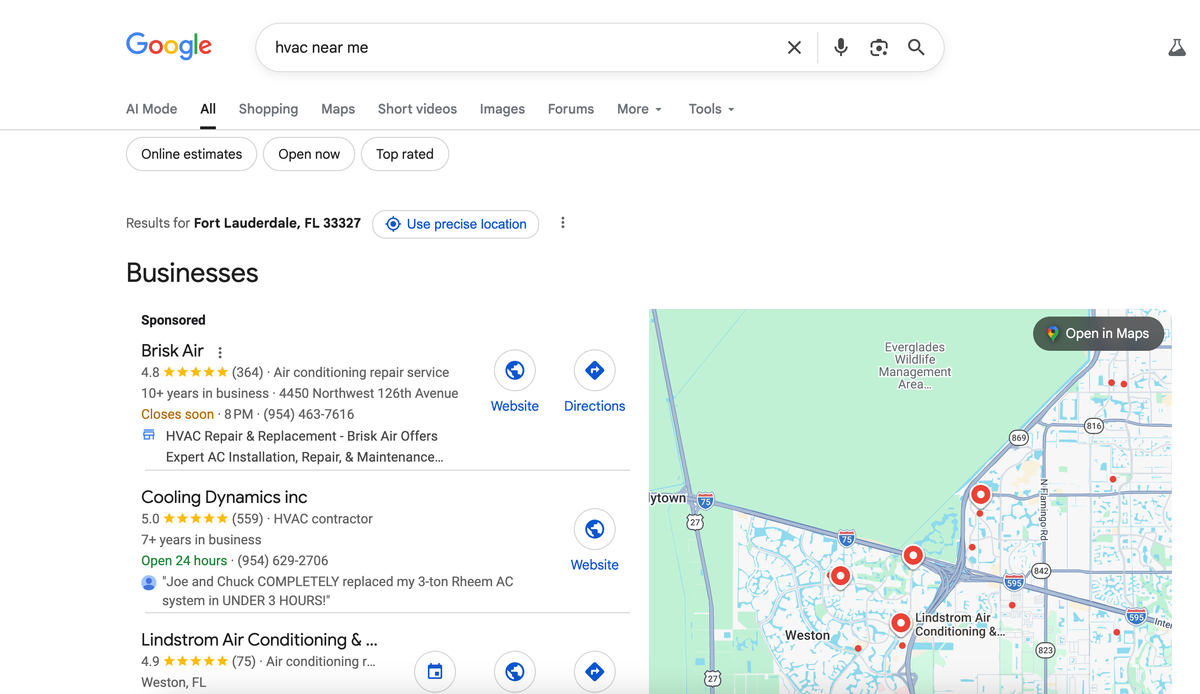
For HVAC companies, the "Map Pack" (the top three local listings) is the most valuable piece of real estate on the internet. This is where the majority of emergency calls originate.
Optimizing Your Google Business Profile (GBP)
Your GBP is your digital storefront. In 2026, a "complete" profile is the bare minimum. To rank, you need an optimized profile.
- Category Precision: Set "HVAC Contractor" as your primary category. Use secondary categories like "Air Conditioning Contractor," "Heating Contractor," "Air Conditioning Repair Service," and "Furnace Repair Service."
- Service Area Realism: Don't claim a 100-mile radius if you only serve 20 miles. Google values proximity. Be specific about the zip codes and neighborhoods you actually cover.
- High-Frequency Photo Updates: Don't just upload one photo of your building. Upload weekly photos of your technicians in uniform, your branded vans on the job, and high-quality "before and after" shots of installations. This signals to Google that your business is active and legitimate.
- The Review Velocity Engine: Reviews are the #1 local ranking factor. You need a consistent stream of new, 5-star reviews.
- Pro Tip: Train your technicians to ask for the review at the kitchen table once the job is done and the customer is happy. Use automated SMS tools to send the review link immediately.
- Responding to Every Review: Reply to every review, both positive and negative. When responding, naturally include your city and service names (e.g., "Thanks for the great review! We're glad our team could help with your AC repair in [City Name].")
Part 2: HVAC Keyword Strategy for 2026
Stop targeting generic keywords like "HVAC company." You need to target the specific ways people search when they are ready to buy.
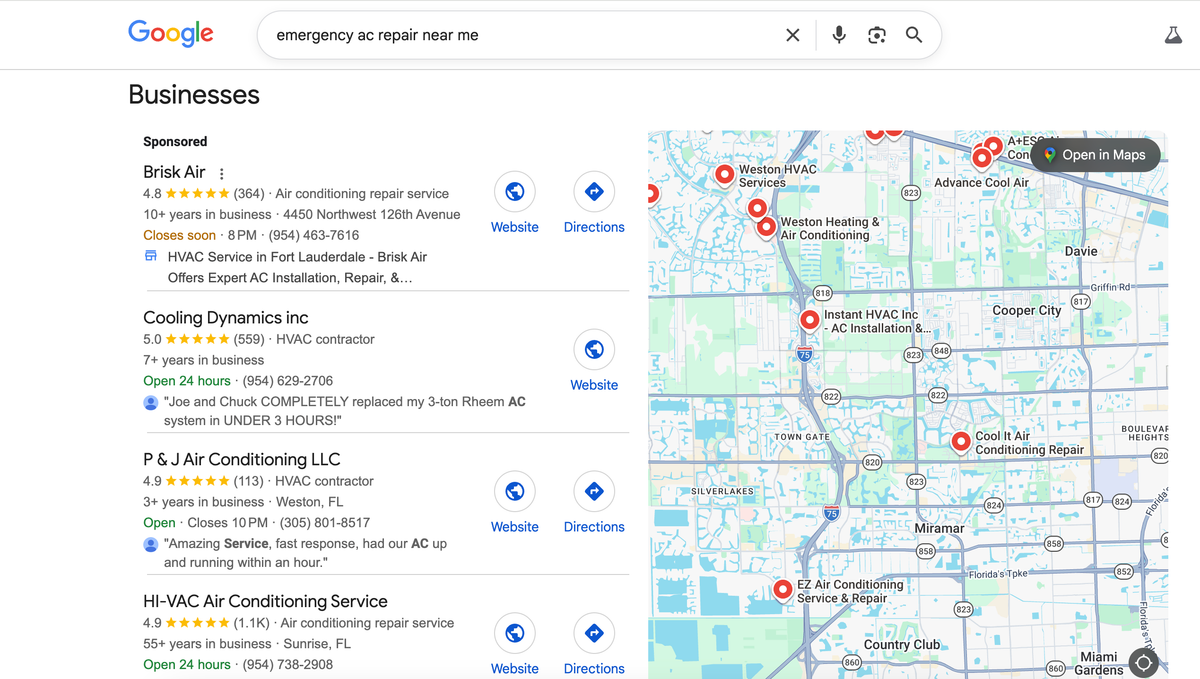
High-Intent Emergency Keywords
- "emergency ac repair [city]"
- "furnace won't turn on [city]"
- "24 hour hvac service near me"
- "broken heater help [city]"
High-Value Installation Keywords
- "cost of new heat pump [city]"
- "best central air conditioning brands"
- "furnace replacement cost estimator"
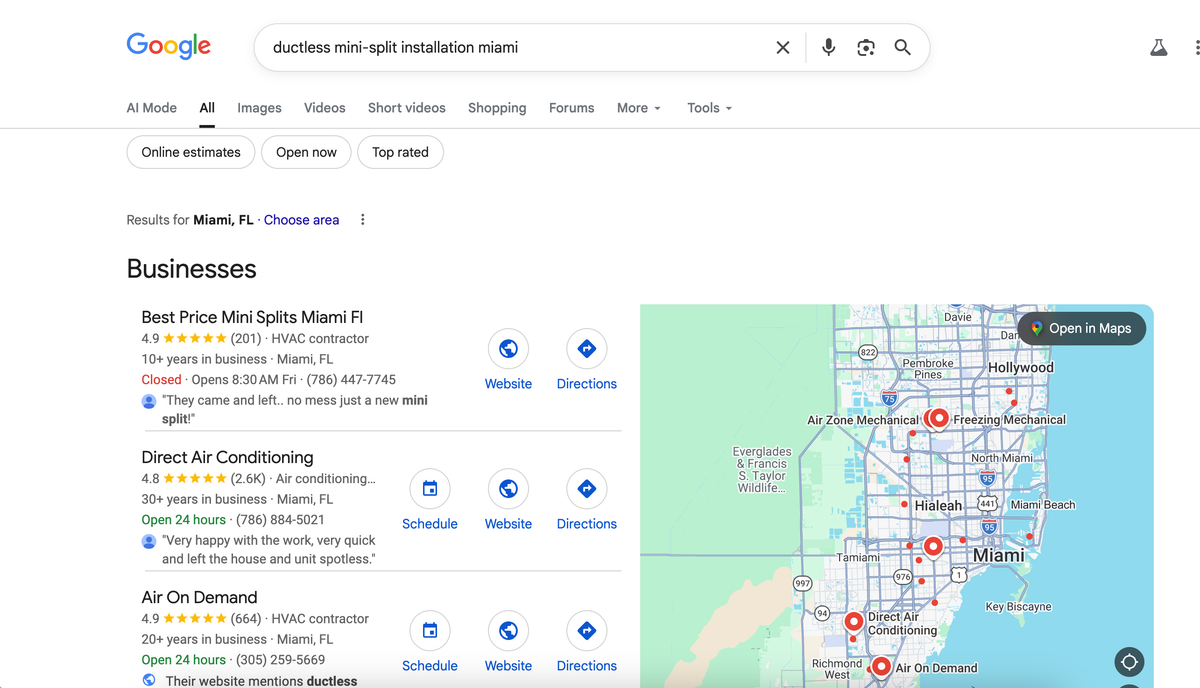
- "ductless mini-split installation [city]"
Informational "Long-Tail" Keywords
These are the questions people ask before they realize they need a professional. By answering these, you build trust and capture the customer early in the funnel.
- "why is my ac blowing warm air?"
- "how often should I change my furnace filter?"
- "signs my heat pump is failing"
- "is it worth repairing a 15-year-old AC?"
Part 3: Technical SEO and Performance (The AiPress Advantage)
In 2026, Google has no patience for slow websites. If your site takes more than 3 seconds to load on a mobile device, you are losing rankings and customers.
Core Web Vitals
Google uses "Core Web Vitals" to measure the user experience of your site. Most HVAC websites are built on bloated WordPress themes that fail these tests.
- LCP (Largest Contentful Paint): How fast the main content loads.
- FID (First Input Delay): How fast the site responds to clicks.
- CLS (Cumulative Layout Shift): Whether the page jumps around as it loads.
Why Static Wins: This is where AiPress excels. By using a static architecture, your HVAC website can load in under a second. This "instant" feel isn't just a convenience; it's a massive ranking signal. When Google sees that users stay on your site instead of bouncing back to the search results, it rewards you with higher positions. If you're currently on a bloated WordPress theme, an AI website migration preserves your rankings while fixing the speed problem — see the same emergency-first UX patterns applied to a close-adjacent trade on the AI websites for plumbers page.
Mobile-First Everything
90% of emergency HVAC searches happen on a smartphone. Your site shouldn't just be "responsive"—it should be designed for a thumb.
- Large, easy-to-tap "Call Now" buttons.
- A "Sticky" header with your phone number.
- Simple, short contact forms.
Part 4: Content Strategy: Becoming the Local Authority
Content is how you prove to Google (and your customers) that you know what you're talking about.
1. Service-Area Pages
If you serve five different cities, you need five different service-area pages. Don't just copy and paste the text and change the city name. Programmatic SEO with AI can generate this at scale without the thin-content risk of a plugin-based city-page template. Each page should include:
- Local landmarks or neighborhood names.
- Specific testimonials from customers in that city.
- Mention of local climate challenges (e.g., "Dealing with [City]'s high humidity during the summer").
- An embedded Google Map of that specific area.
2. The "Problem/Solution" Blog
Write articles that solve common homeowner problems.
- Example: "5 Reasons Your AC is Making a Grinding Noise." At the end of the article, provide a clear Call to Action (CTA): "Hearing these noises right now? Call us for a 24/7 inspection."
3. Video Content
A 30-second video of a technician explaining a common issue can do more for your SEO and conversion rate than 1,000 words of text. Transcribe these videos and post them on your blog to capture video search traffic.
Part 5: Schema Markup for HVAC
Schema markup is a hidden code on your website that helps search engines understand your business. For HVAC, you should be using:
- LocalBusiness Schema: Tells Google your address, phone number, and hours.
- Service Schema: Lists your specific services (AC repair, furnace installation, etc.) so they can appear in search snippets.
- Review Schema: Allows those gold stars to appear next to your website in search results, significantly increasing your click-through rate.
- FAQ Schema: Displays common questions and answers directly on the search results page, taking up more real estate and pushing competitors down.
Part 6: Local Link Building and Citations
SEO isn't just about what's on your site; it's about what the rest of the internet says about you.
High-Quality Citations
Ensure your business name, address, and phone number (NAP) are identical across the web.
- Top Directories: Yelp, Angi, HomeAdvisor, BBB, and YellowPages.
- Niche Directories: ServiceWhale, HVACRedbook, and local chamber of commerce listings.
Local Backlinks
A link from a local high school sports team or a local charity you sponsor is worth ten links from random websites. Why? Because it proves to Google that you are a legitimate, active member of your local community.
Part 7: Converting Traffic into Leads
Ranking #1 is useless if nobody calls you. Your website must be a conversion machine.
Trust Signals
Homeowners are often nervous about letting strangers into their homes. Your site must build immediate trust.
- Real Photos: No stock photos of models in clean uniforms. Show your actual team.
- License and Insurance: Display these prominently.
- Guarantees: "Fixed Right the First Time" or "No-Hassle Pricing."
Frictionless Contact
Don't make people work to hire you.
- One-Click Calling: The phone number should be at the top of every page.
- Online Scheduling: Many modern customers prefer to book a slot online without talking to anyone.
- Live Chat: A great way to capture leads after hours.
Conclusion: The Long Game of HVAC SEO
SEO for HVAC is not a sprint; it’s a marathon. It takes time to build the authority required to outrank competitors who have been online for 15 years. However, the rewards are immense.
A high-ranking HVAC website is an asset that works for you 24/7, generating leads while you sleep. By focusing on technical excellence (speed and mobile performance), deep local authority (GBP and citations), and helpful, intent-driven content, you can turn your website into your company’s most profitable salesperson.
When to use AiPress: If your HVAC leads are seasonal and emergency-driven, you need a site that loads instantly on a cracked phone screen at 2am and a service-area page structure that scales to every city you truck-roll to — without a plugin stack that slows down every August traffic spike. That's the exact use case AiPress is built for.
Is your current HVAC website holding you back with slow load times and poor mobile performance? Get a free preview of an AiPress-powered site built to dominate local search.
Ready to transform your WordPress site?
Get a free preview of your site as a fast, modern site.
Free preview