
AI Content Operations for Home Service Brands: From Calendar to Publish-Ready Articles
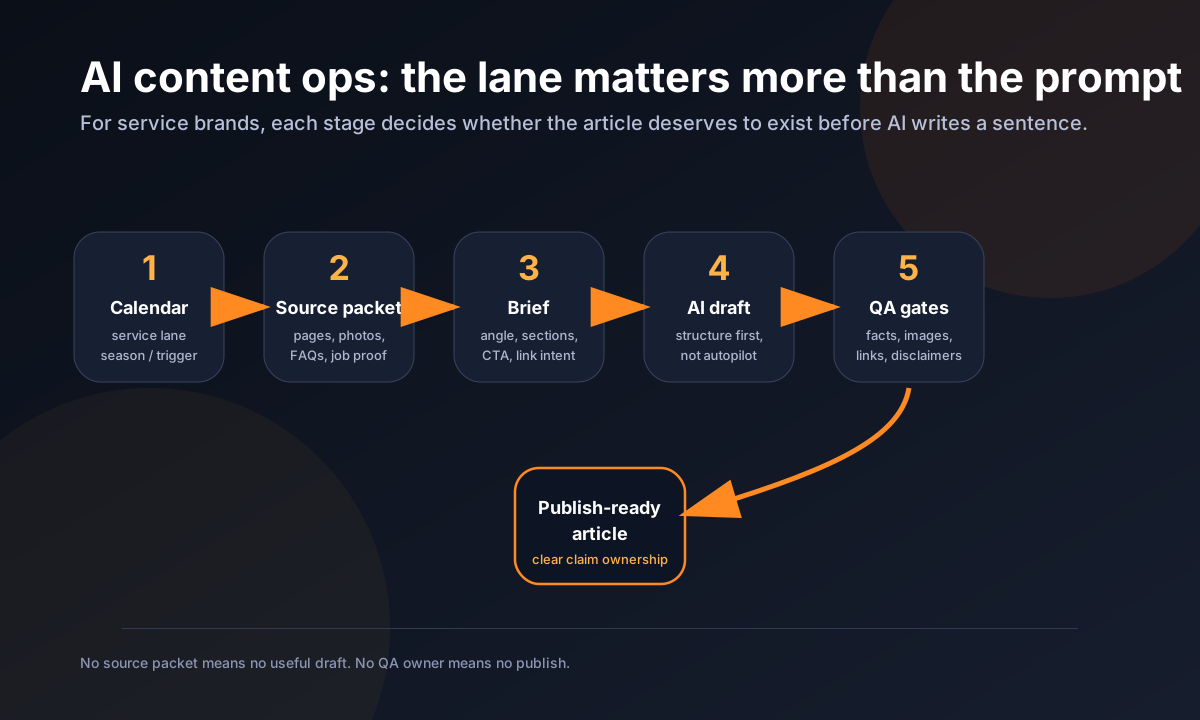 For service brands, the content lane should decide whether an article deserves to exist before AI writes a sentence.
AI content operations matter more than the model when a plumbing, HVAC, roofing, or restoration brand wants publishable articles instead of generic drafts.
That is the part many teams skip. They buy a tool, open a blank chat, ask for a blog post, and hope the page sounds local, accurate, helpful, and conversion-ready. Sometimes the result is decent. More often, it is a page that feels plausible until a technician, office manager, or skeptical homeowner notices the gaps.
Google's helpful content guidance is a useful reality check here. The questions are not "Was AI involved?" They are closer to "Does this add original value?" "Does it show real expertise?" and "Would someone leave feeling the page actually helped?"
That means the operating system around the draft decides whether AI becomes a force multiplier or a thin-content machine.
Why AI content breaks when the workflow starts with prompts
When the workflow starts with prompts, the draft is forced to invent its own constraints.
That is dangerous for home service brands because the article usually needs to juggle:
- specific service language
- neighborhood or city context
- real homeowner objections
- proof that the company actually solves this problem
- a clean handoff to the right money page
If none of that is assembled before drafting, the model will fill the gaps with averages. The result is the kind of content Google warns against in two different ways:
- its helpful-content guidance asks whether the page provides substantial value and serves a real audience
- its spam policies say using generative AI to create many pages without adding value for users is an example of scaled content abuse
For a service business, the failure usually looks less dramatic than a spam penalty. It looks like pages that are technically readable but commercially weak:
- a water-damage article with no mention of what the actual inspection process looks like
- a drain-cleaning article that never points the reader to the service page that should capture the lead
- a "storm prep" guide built from generic tips instead of the brand's real emergency workflow
The issue is not that the model wrote the copy. The issue is that nobody told the model what evidence, what boundaries, and what next step belonged on the page.
The operating lane from calendar to publish-ready article
The cleanest way to avoid that problem is to treat each topic as a lane, not a loose idea.
At AiPress, that lane starts upstream. A topic is tied to a service cluster, a real demand trigger, and a destination page before the draft begins. That same thinking shows up in the Miami plumbing case study, where support content is meant to strengthen money pages instead of competing with them. AiPress says blog posts should link up to city pages, city pages should link up to service hubs, and the internal-link flow should support conversion-focused pages.
That is a useful content-ops lesson for smaller editorial teams too.
Instead of asking, "What can we publish this week?" ask:
- Which service lane are we supporting?
- What seasonal, diagnostic, or objection-driven trigger makes this article useful now?
- What proof do we already have?
- Which page should gain authority or clicks if this article performs?
AiPress also frames its website process as reviewable, not automatic. On the AI Websites page, the review step is explicit: preview every page, compare it to the old site, request changes, and verify accuracy before anything goes live.
That same logic belongs in editorial operations. AI can structure, summarize, and draft. It should not decide alone whether the page is accurate enough or valuable enough to publish.
What belongs in the source packet before AI writes anything
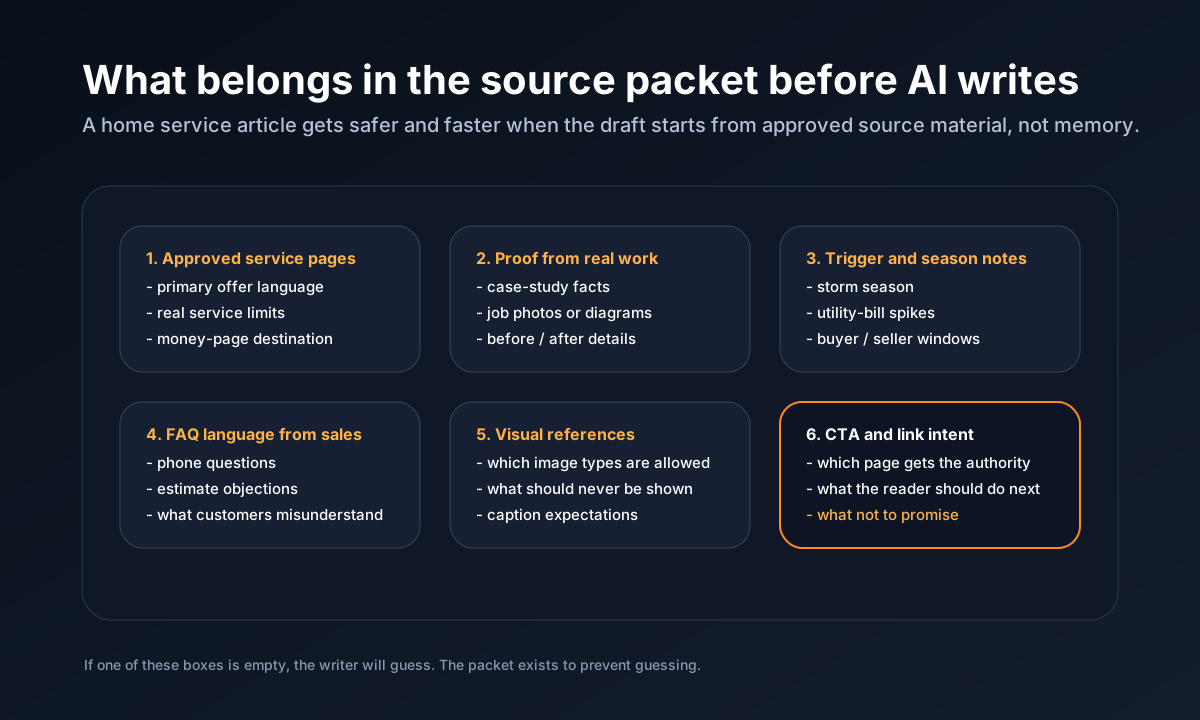 A useful source packet gives the draft real constraints: approved pages, proof, seasonal triggers, visuals, and CTA intent.
The source packet is what keeps a draft grounded in the business you actually run.
For home service brands, that packet usually needs six ingredients.
1. Approved service pages
These define the offer, the promise, and the language the article should support. If the brand says "drain cleaning," "water damage restoration," or "AC repair" a certain way on its service pages, the draft should not improvise a new offer structure.
2. Proof from real jobs or case studies
This might be a real service workflow, an inspection checklist, a job photo set, or a case-study fact. The point is to give the article something better than paraphrased internet advice.
3. Trigger notes
Home service demand is usually tied to a trigger:
- heavy rain
- first summer utility-bill spikes
- hurricane prep
- slow drains before a holiday gathering
- visible ceiling stains before listing photos
The trigger is what makes the topic feel timely and specific instead of generic.
4. FAQ language from sales or operations
The questions your staff hears every day are often the best raw material in the packet. They are closer to buyer language than a keyword list alone.
5. Visual rules
The packet should tell the writer what kind of images are allowed, what the captions need to explain, and what would make the page feel fake or off-brand.
6. CTA and internal-link intent
If the draft does not know where the reader should go next, it will usually scatter links or tack on a weak closing paragraph. Decide the destination first.
This is also where the packet beats prompt engineering. A long prompt still fails if the source inputs are fuzzy. A modest prompt often works well when the packet is strong.
Image rules that keep home service content believable
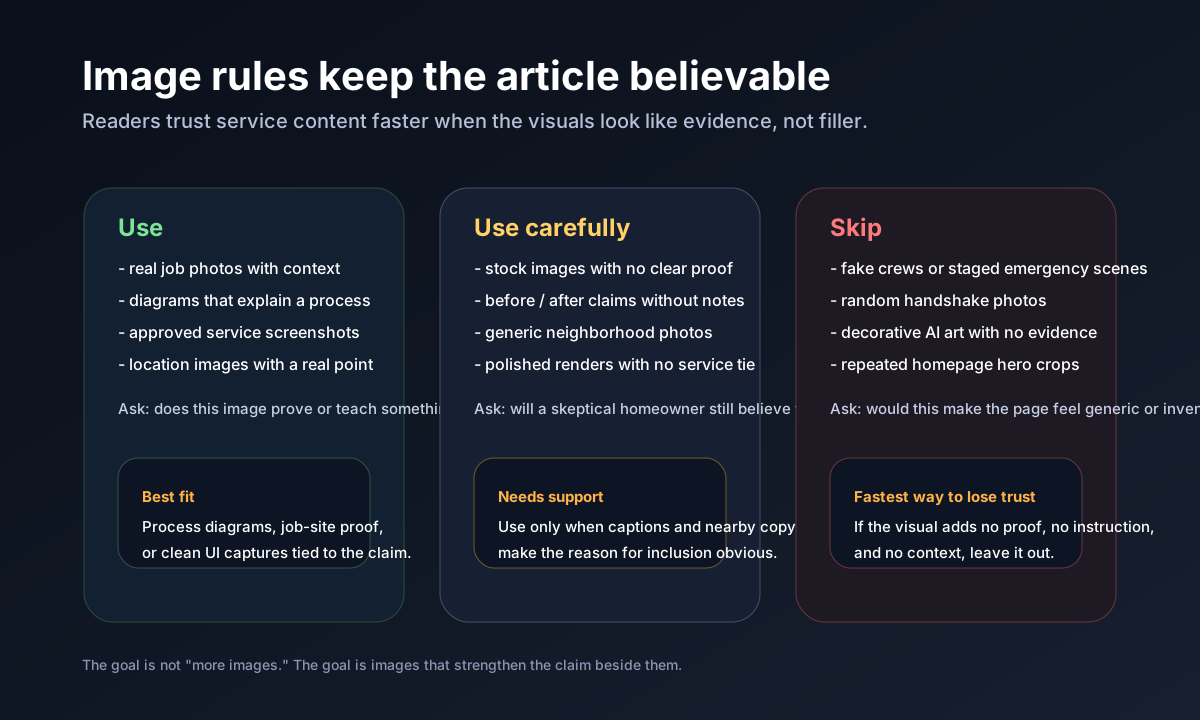 The visual rule is simple: if the image does not prove or teach something, it probably does not belong on the page.
One of the fastest ways to make AI-assisted content feel untrustworthy is to pair it with lazy visuals.
Home service readers are usually looking for signs of competence, not decoration. That is why the safest visual hierarchy looks something like this:
- real job or process images with clear context
- simple diagrams that explain a decision or workflow
- approved screenshots or UI references when the page is about a technical system
- location or stock imagery only when it clearly supports the nearby claim
The images to avoid are predictable:
- fake crews standing beside spotless equipment
- dramatic emergency scenes that do not match the article
- decorative AI art that teaches nothing
- repeated hero crops that make every article look like the same landing page
For brands building a repeatable system, image rules should answer three questions:
- what visual types are allowed
- what visual types need extra review
- what visual types should never ship
That matters because readers often judge the truthfulness of the article before they finish the second section. If the visual looks generic, the copy has to work harder to earn trust.
The QA gates that stop weak drafts before they ship
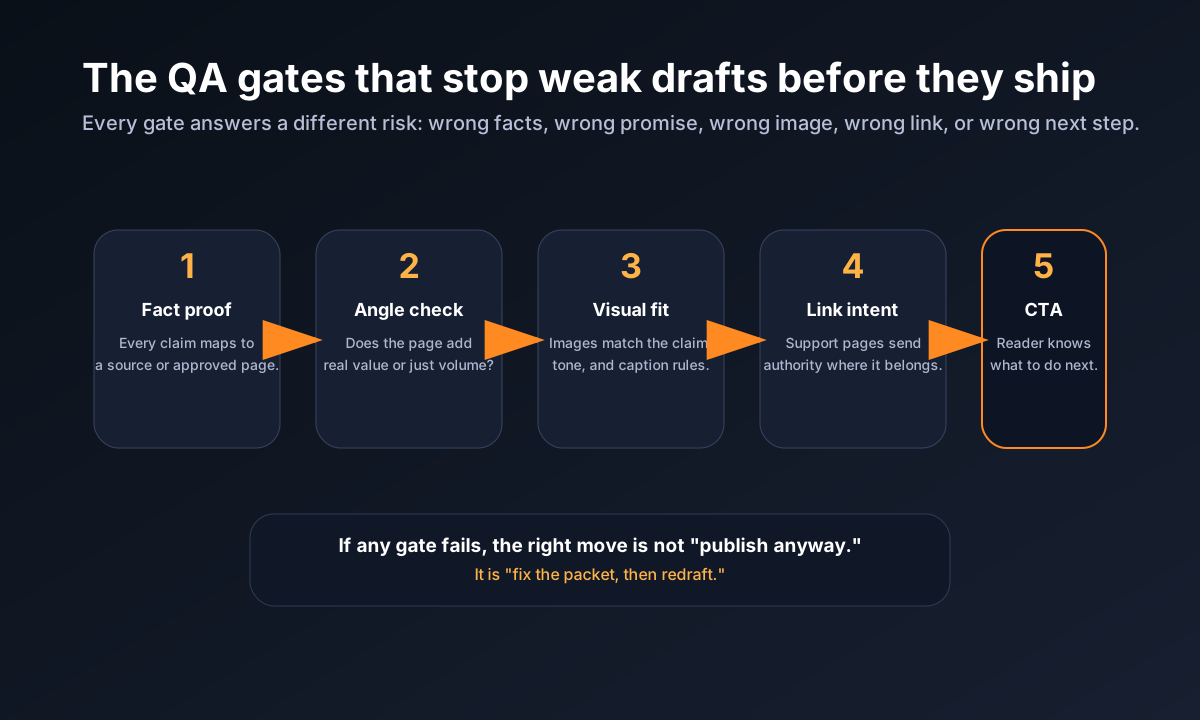 Strong review systems stop weak drafts before they become live pages.
AiPress makes a useful point on its programmatic SEO systems page: teams cannot review thousands of pages one by one, so they should review by pattern, check outliers, and monitor quality signals after launch.
That principle works just as well for service-brand editorial workflows.
The practical QA gates are straightforward:
Fact proof
Can every meaningful claim be traced to an approved page, a documented workflow, a case-study source, or an authority link?
Angle check
Does this article add something specific, or is it just another "tips" page because the calendar had an open slot?
Visual fit
Do the images actually support the claim beside them, and do the captions explain why the reader is seeing them?
Link intent
Does the article support the right service, city, or conversion page, or is it leaking attention into unrelated pages?
CTA review
Does the ending tell the reader what to do next without overpromising?
Google also says Search Console is meant to help site owners monitor, maintain, and troubleshoot their presence in search. That makes it part of content ops, not just technical SEO. If a page underperforms, the next move is not always "publish more." Sometimes it is "refresh this page," "merge it," or "fix the destination page it was supposed to support."
How to branch one proof set into multiple support pieces
The best content systems do not ask the team to invent every article from scratch.
One strong proof set can create an anchor article plus several support pieces without forcing duplication. For a plumbing or restoration brand, one validated packet might include:
- a service-page promise
- technician notes from common jobs
- seasonal triggers
- customer objections
- approved job photos or diagrams
- a case-study detail that shows scale or process
From there, the team can split the work cleanly:
- the anchor article explains the broad decision
- a support piece handles the seasonal trigger
- another handles the diagnostic question
- another handles the proof or process explanation
- another handles the objection that slows estimates or bookings
This is where the AiPress plumbing case study is useful as a mental model. The site architecture is tiered because not every page deserves equal depth. Content ops should work the same way. Not every supporting article deserves the same investment, and not every idea deserves a new URL.
That is how you keep the calendar from becoming a volume contest.
FAQ
Do home service brands need a different AI content workflow?
Usually, yes. Service brands rely on real-world proof, local context, and clear next steps more than generic informational sites do. That raises the cost of guessing.
Is it enough to give AI a list of keywords and services?
No. Keywords help with direction, but they do not replace approved claims, real job proof, image rules, and internal-link intent.
When should a team refresh instead of publish new?
Refresh when the core intent already exists on the site and the better move is to improve proof, update structure, or strengthen the destination page. Publishing new is stronger when the angle answers a distinct job the current library does not cover.
How much human review is still necessary?
Enough to confirm claims, images, links, and CTA fit. AI can reduce drafting time, but the business still owns judgment.
Next steps
If your team already has ideas but not a dependable production system, fix the lane before you buy another writing tool. Start with the source packet, the image rules, and the QA gates. Then make sure every support article strengthens a real revenue page instead of drifting into content for content's sake.
If you want help building that kind of operating system into the site itself, explore how AiPress approaches programmatic SEO systems, see the AI website workflow, or request a free homepage preview.
Search behavior, AI features, and editorial workflows change quickly, so confirm important details against your live site and the current official documentation before you publish major updates.